TL;DR: Position 5 hard support is the best beginner role in Dota 2 because it teaches core fundamentals with the least punishment for mistakes. Beginners avoid heavy farming pressure and carry responsibility while learning lane control, vision, stacking, and teamplay - skills that transfer cleanly to every other role.
In Dota 2, the role you choose as a beginner can quietly decide whether every match feels manageable - or like you're being punished for a mistake you didn't even know you made. Pick the wrong one, and you can spend the whole game lost, blamed, and stuck wondering why everyone else seems to know what's happening. Pick the right one, though, and suddenly the game starts making sense faster than you'd expect.
So which role actually gives new players the best chance to learn without getting crushed? The answer isn't the one most beginners assume - and once you see the tradeoffs, the "best" choice gets a lot more interesting.
Why Position 5 hard support is still the best beginner role in Dota 2
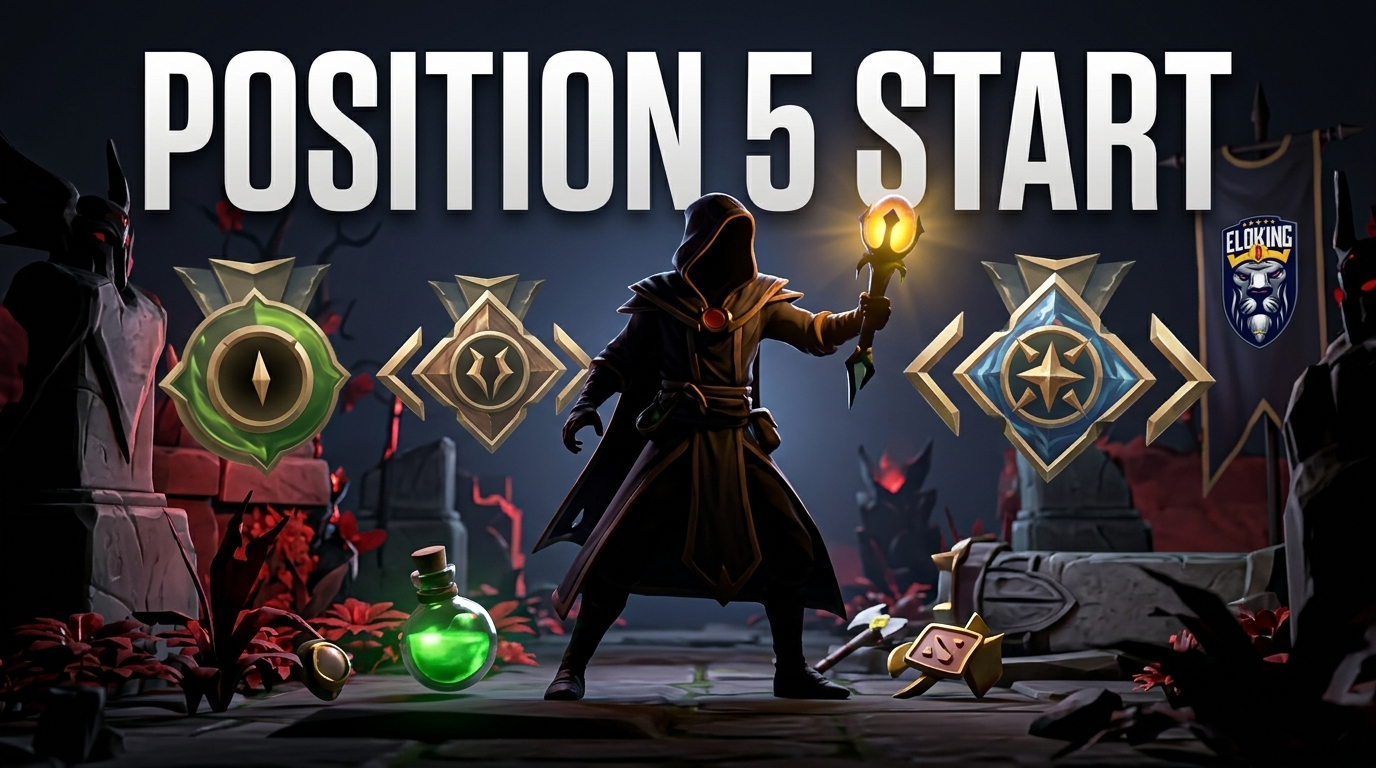
Starting in the fifth slot offers the highest learning value per mistake, which is vital in a game where a single bad early game phase can snowball out of control. Eloking's July 14, 2026 guide highlights how this job reduces mechanical stress while introducing core fundamentals, a view supported by Esports Insider's January 16, 2026 guide. New players don't need a high-APM sideline; they need a role that keeps them in the match long enough to actually observe and understand the flow of play.
This support job removes many common stressors that cause beginners to tilt. You aren't forced to contest every last-hit under heavy pressure or maintain perfect farm efficiency. Since you aren't the primary hero the team relies on for damage, there are fewer ways to accidentally ruin the match for everyone else. Instead of juggling item timings and execution-heavy wins, you focus on fundamental calls: positioning, trading hits, and knowing when to retreat. It offers a gentler punishment curve for those still learning the ropes.
The skills you build here are never wasted. Mastering map awareness, vision, and stacking provides a curriculum that transfers to every other role. If you eventually move to a core slot, you won't be starting from scratch. You will already understand how to read map pressure and protect space, treating the sidelines as a complex system rather than just a duel. This makes hard support the most effective entry point for long-term growth.
The Five Dota 2 Positions: What beginners gain and avoid
When choosing between the five roles, the real question is: "Which slot gives me the least chance to fail while I'm still learning?" Position 5 wins this test. While other jobs require complex roaming sense or perfect farming patterns, the hard support role provides a structured environment to observe the match. Higher-numbered positions carry a heavy mechanical load that can be overwhelming for new players.
| Position |
Role Name |
Primary Responsibility |
Beginner Difficulty |
| 1 |
Carry |
Farm gold and carry the team's damage in the late game. |
High: Requires perfect last-hitting and item timing. |
| 2 |
Mid |
Win the 1v1 duel and rotate to help other sidelines. |
Highest: Total isolation and high mechanical skill needed. |
| 3 |
Offlane |
Bully the enemy carry and start teamfights. |
Medium: Needs to understand when to be aggressive. |
| 4 |
Soft Support |
Roam the map, create chaos, and assist the offlaner. |
Medium: Requires good timing and map movement. |
| 5 |
Hard Support |
Protect the carry, manage vision, and enable the team. |
Low: Focuses on fundamentals with less farm pressure. |
This comparison shows the real trade-off. Choosing the fifth slot delays the most punishing parts of the game without removing the mechanics that matter. You still learn how the sidelines function and how fights erupt, but you do so without the burden of carrying the entire team's economy on your back.
What a Position 5 player is actually responsible for in lane and beyond
In the early game phase, a support's primary goal is to prevent the sidelines from collapsing. This involves trading hits when the matchup allows, blocking enemy pulls, and managing creep equilibrium to keep the wave in a safe spot for your partner. It is real Dota: you learn exactly how fast a match can spiral when nobody is managing the resources. Once the laning phase ends, your job expands to buying vision, dewarding enemy map control, and stacking neutral camps to boost your team's economy.
The "Teammate Dependency" Objection: Many beginners worry that playing support makes them too dependent on their teammates. If your carry is struggling, it can feel like your impact is zero. However, as noted in Boosteria's March 2026 support guide, you don't need to be the richest hero to be the most important. A good support can stabilize a failing lane, provide the vision that prevents a comeback, and turn a chaotic fight with a single well-placed save. Relying on teammates isn't a weakness; it's a learning environment that teaches you how to influence the game through strategy and utility rather than just raw gold.
Position 5 also teaches restraint. You learn to sacrifice your own resources so a core can hit a power spike, and you learn not to chase "fake value" kills that leave your team vulnerable. This builds a level of game sense that core players often lack - the ability to sit back, show less on the map, and wait for the enemy to make the first mistake. That is how you start winning matches through intelligence rather than just reflexes.
Dota 2 Beginner Setup and Training Plan
Before you jump into matchmaking, your interface setup is just as important as your hero choice. Guides from June 2026 recommend turning on hero icons for the minimap and enabling the "Net Graph" to monitor performance. Ensure your hotkeys are comfortable and that you've tuned your health bar and communication settings. A readable minimap directly strengthens your ability to ward and react to enemy movements, which are the core duties of a support.
The First 10 Minutes: Your Lane Plan
The laning stage decides your early gold and experience. For a beginner, success isn't always about kills; it's about these three objectives:
- Equilibrium: Keep the creep wave near your tower so your carry can farm safely. Use pulls as a "reset button" if the wave pushes too far.
- Resource Trading: Hit the enemy heroes when they try to last-hit, but don't take so much damage that you have to leave the lane.
- Survival: Focus on staying alive and gaining experience. A dead support provides zero help and gives the enemy free momentum.
Five-Match Training Checklist
To improve quickly, follow this structured checklist for your first few matches:
- Match 1-2: Focus entirely on not dying. Stay behind your cores and practice positioning during teamfights.
- Match 3: Focus on vision. Try to keep at least two active wards on the map that show enemy movement.
- Match 4: Focus on pulling. Successfully pull a small camp to reset the lane equilibrium at least three times.
- Match 5: Focus on stacking. Add extra farm to a neutral camp for your carry whenever the timer hits the 53-second mark.
Best beginner heroes and role recommendations in 2026
According to Esports Insider's January 16, 2026 guide, beginner-friendly heroes succeed when they have a simple game plan and are easy to pilot. While we recommend starting with hard support, having a small pool of reliable heroes for every role is essential as you learn the game's draft mechanics.
| Role |
Best Beginner Heroes |
Why They Work |
| Pos 5 (Hard Support) |
Crystal Maiden, Ogre Magi, Lich |
Simple spells, obvious teamfight roles, and high durability or utility. |
| Pos 4 (Soft Support) |
Lion, Witch Doctor, Jakiro |
Strong disables and straightforward impact without needing heavy farm. |
| Pos 3 (Offlane) |
Bristleback, Tidehunter, Axe |
Tanky and forgiving; they excel at starting fights and surviving pressure. |
| Pos 2 (Mid) |
Dragon Knight, Sniper, Viper |
High survivability or long range, making the 1v1 matchup easier to manage. |
| Pos 1 (Carry) |
Juggernaut, Wraith King, Phantom Assassin |
Reliable escape tools or built-in sustain to help during the farming phase. |
For those focusing specifically on the hard support role, these three stand out:
- Crystal Maiden: One of the cleanest starter picks because her job in fights is unmistakable and her mana aura helps the whole team.
- Ogre Magi: Exceptionally tanky and forgiving, allowing you to survive positioning mistakes that would kill other supports.
- Lich: Teaches the importance of spell timing and lane control without requiring complex mechanical execution.
Common beginner mistakes on Position 5 that slow learning
One of the most common support grief patterns is the player who tries to "help" by walking too far forward, eating spells, and dying before the lane even starts. That feels active. It usually just hands the enemy free tempo. The same thing happens when a beginner buys the wrong expensive item and acts like they are the second core. The game does not care that you wanted impact. It cares that your carry has no space and your team has no vision.
Stealing farm is another classic mistake. If you keep taking waves, you are not supporting anymore. You are just slowing your own learning and starving the role that was supposed to scale. Forcing random plays does the same thing. A support who keeps roaming for highlights instead of stabilizing the lane usually ends up with neither pressure nor progress. You need fewer "big brain" moments and more honest ones.
The fix is boring, and that is why it works. Review your deaths. Check whether your wards actually changed the fight. Look at the lane and ask whether you helped it or just wandered through it. If you want to improve fast, stop chasing the feeling of being useful and start checking whether you were useful. That's the difference between a support player and someone who's just carrying support items.
References













 Quality
