Streamlined three-tier loyalty program where every member enjoys the same high-quality rewards, with benefits escalating at each tier.
Simple yet effective, this program stands as the best deal for Eloking's boosting services, ensuring maximum value and satisfaction for all our users.
Cashback on all Eloking boosts (3%, 5%, 7%)
Discounts for all Eloking boosts (5%, 10%, 15%)
Discount for a friend 🤗
Free daily lootbox spin with industry-leading rewards
Member exclusive season and event offers
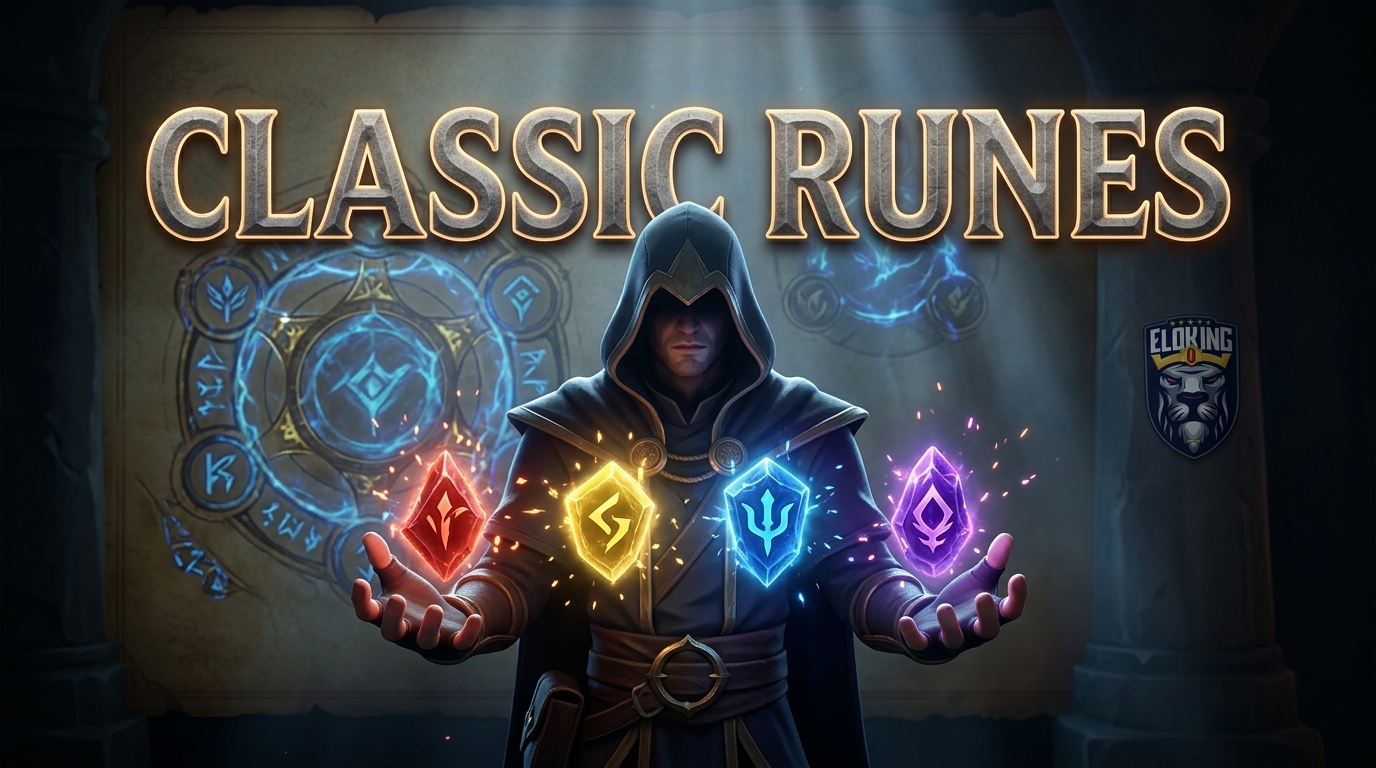
How Marks, Seals, Glyphs, Quintessences, and Rune Pages Work in League Classic 2026
h
Hamza Rashid
Gamer
16 Aug 2026
Posted On
Listen to this post
How Classic rune categories and Rune Pages work in League of Legends Classic 2026 depends on whether you mean Classic or modern Reforged runes. Classic restores the legacy four-type system, while Reforged uses paths, a keystone, lesser runes, and shard slots, so those modern setups do not answer a Classic rune question.
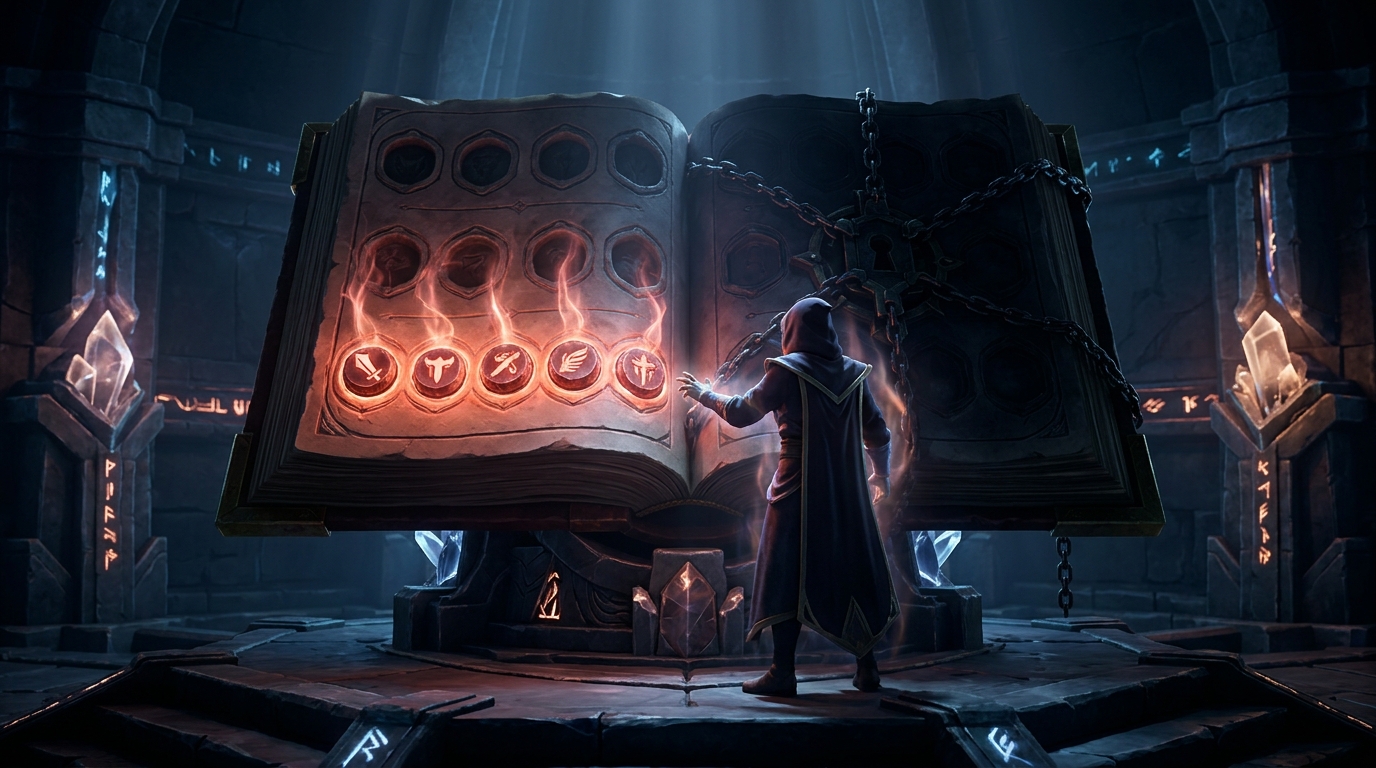
In Classic, loadouts use Marks, Seals, Glyphs, and Quintessences; the practical question is how they fit the 2026 progression ladder and loadout economy. The framework-versus-implementation split comes first, followed by the exact loadout structure and unlock order.
Framework vs. implementation separates Classic from Reforged
League of Legends Classic is Riot's official name for the product, and Riot describes it as bringing back original champions, items, and systems. Its July 21 support documentation specifically says Classic restores legacy Runes and Masteries rather than Runes Reforged.
That boundary matters. Classic uses Marks, Seals, Glyphs, and Quintessences to add champion stats from the start of a match. The three shards are part of a modern loadout and are unrelated to the Classic account level at which Marks unlock.
Use one clean check before copying any setup: open the rune screen for League of Legends Classic. If the setup is organized around paths, a keystone, and shards, stop. You are looking at modern League information, not a Classic loadout.
Struggling to win? Bad teammates?
Purchase a game with one of our PRO players.
One game
Average wait time <30 minutes
$4.00
$3.32 per game
Two games
Average wait time <30 minutes
$8.00
$3.00 per game
Three games
Average wait time <30 minutes
$12.00
$2.50 per game
Four rune types use a 9/9/9/3 layout
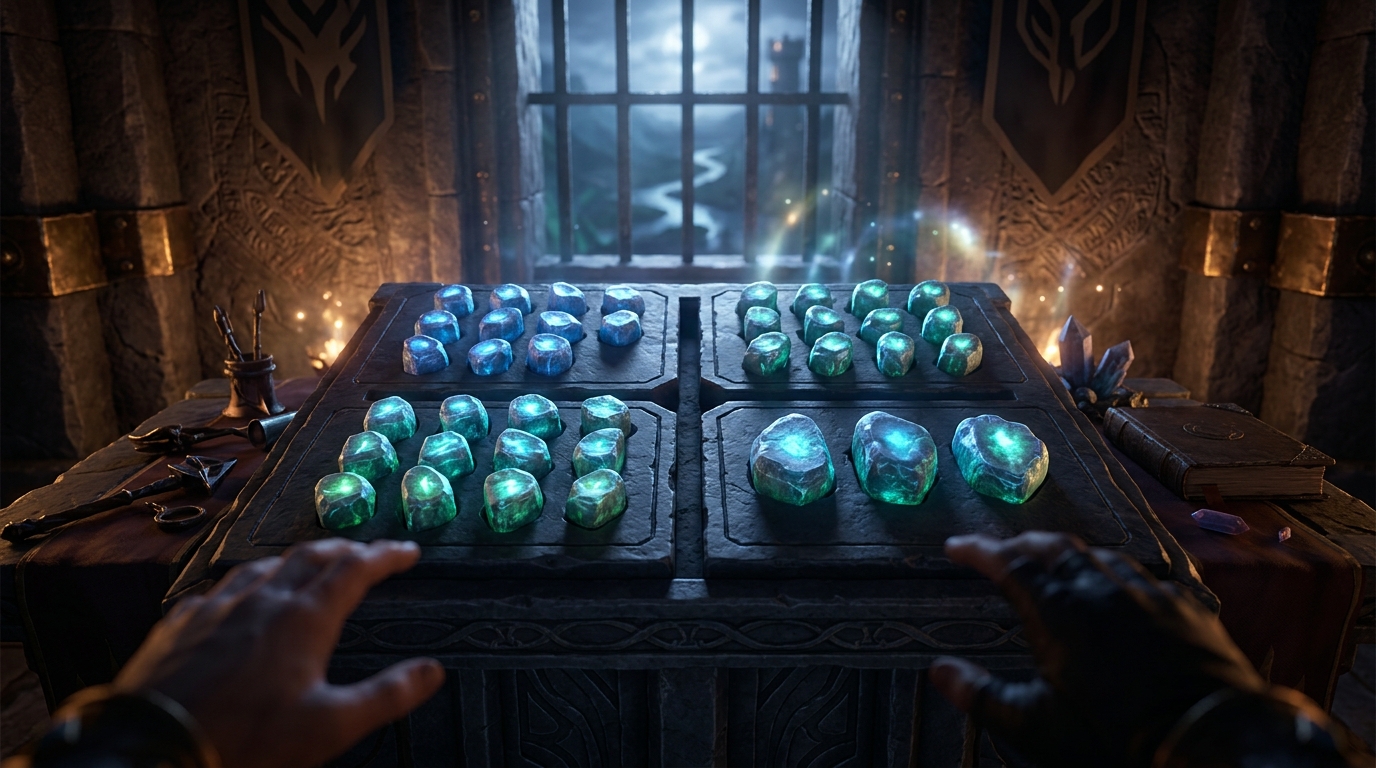
A complete Classic Rune Page contains four groups. Mobalytics' guide, updated July 23, 2026, documents the current layout as nine Marks, nine Seals, nine Glyphs, and three Quintessences: 30 runes total.
Keep the configuration focused. Mobalytics recommends simple setups, commonly stacking nine copies of one minor rune. Historically, a category's "primary" stats granted stronger bonuses than secondary placements. That distinction explains the old building grammar, but Riot's recovered 2026 support material does not include a complete current efficiency table.
Fill each of the Mark, Seal, and Glyph rows with one nine-rune package, then add one three-Quintessence package. Four clear stat blocks are easier to understand and reuse than scattered bonuses pulling in different directions.
Level 4 Marks start the current unlock ladder
Classic unlocks rune categories at fixed account levels, not one slot at a time. Riot Games' League Classic - Runes & Masteries support article, updated July 21, 2026, provides the official unlock order and Influence Point prices below.
Classic level
Unlock
Official Riot cost or access
3
Masteries
Free to use
4
Marks
500 - 650 IP per rune
6
Seals
500 - 650 IP per rune
7
Glyphs
500 - 650 IP per rune
8
Quintessences
1,250 - 1,500 IP per rune
Runes may also come from Classic Missions, account levels, Classic Pass progress, or the Classic Store. The levels above mark category access, not rune or slot counts. For Quintessences, follow Riot's official 1,250 - 1,500 IP range rather than broader third-party figures.
Riot's July 21 support documentation also says players start with three Rune Pages. Additional loadouts can be earned by leveling or bought with Classic Pass Coins; the official Classic Store price is 1,500 IP each.
Spend around that sequence. At Level 4, complete a reusable Mark package. Add Seals at Level 6 and Glyphs at Level 7. Hold the costlier three-rune Quintessence package until it becomes usable at Level 8.
A complete Rune Page costs 17,250 to 22,050 IP before rewards
The price of a usable loadout is easier to judge when each category is multiplied by its required slots. This is a worst-case store calculation: Missions, account levels, and Classic Pass rewards can supply runes before you buy them.
Category
Slots
Riot price per rune
Full category cost
Marks
9
500-650 IP
4,500-5,850 IP
Seals
9
500-650 IP
4,500-5,850 IP
Glyphs
9
500-650 IP
4,500-5,850 IP
Quintessences
3
1,250-1,500 IP
3,750-4,500 IP
Complete loadout
30
—
17,250-22,050 IP
Do not buy all 30 blindly. Claim earned runes first, then finish one reusable category package at a time. A fourth empty loadout adds convenience but no stats, so its 1,500 IP cost comes after the three starting loadouts contain complete setups.
Build three reusable loadouts before buying a fourth
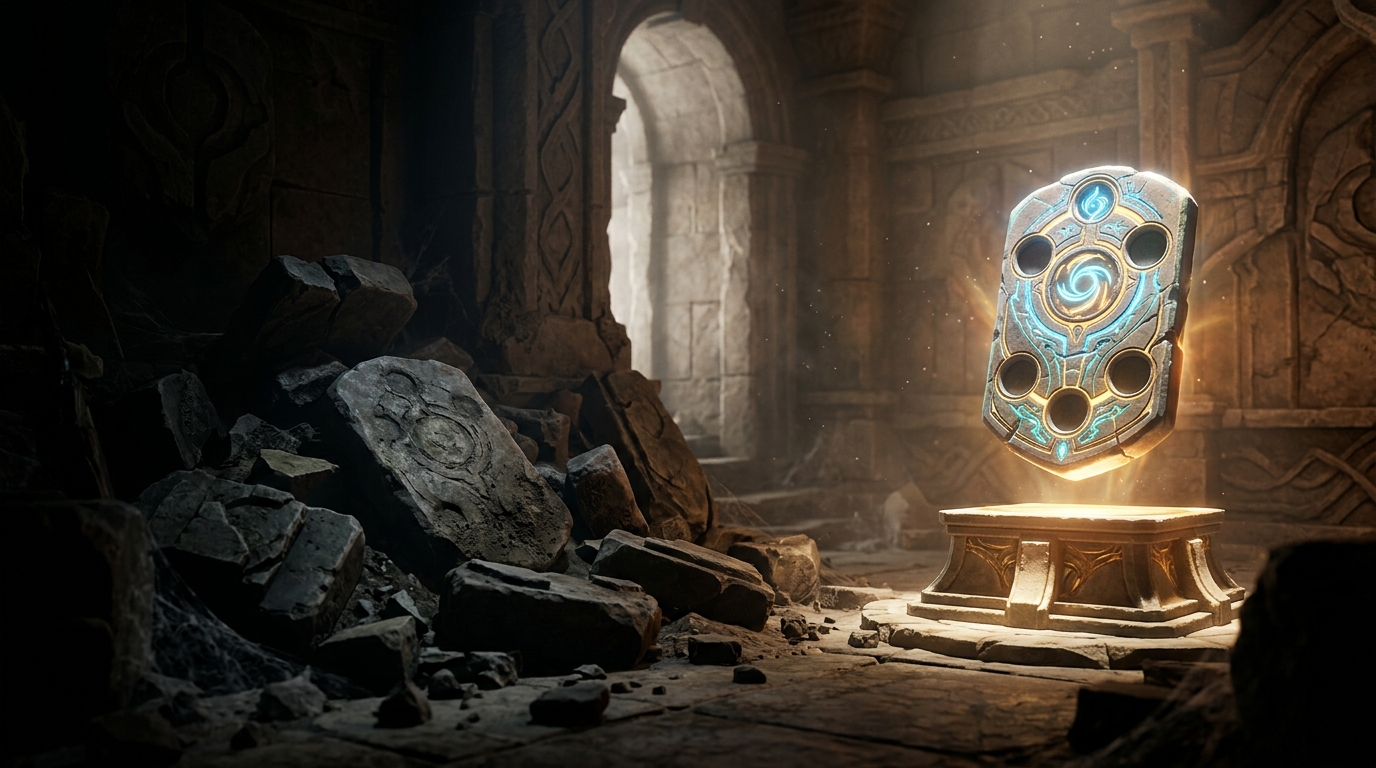
Three starting loadouts are enough if each loadout solves a broad matchup problem. They become cramped when every loadout is locked to one champion. Early IP is better spent completing reusable rune packages than buying a fourth empty loadout for 1,500 IP.
Choose the loadout's main damage pattern. A magic-damage loadout can start with nine Magic Penetration Marks; a physical loadout can use an attack-damage package when the champion needs stronger early hits.
Choose immediate defense or scaling. Armor is an early-lane answer. A scaling defensive stat is for value later. Pick based on when the champion must survive, not because "scaling" sounds automatically better.
Use Glyphs to cover the remaining need. Keep all nine together unless a sourced champion setup justifies splitting them.
Give the three Quintessence slots one job. Mobalytics' Karthus example uses AP Quintessences for 15 AP at level one. Its Janna example uses three Gold Quintessences for 3 extra gold per 10 seconds. Those are examples of focused packages, not universal best loadouts.
Name the saved loadout by function, such as "Magic Pen + Early Defense" or "AD + Scaling Defense." Before champion select ends, choose the loadout whose timing matches the lane.
If the summary shows incomplete rows, finish those stacks before adding niche variants. If all three loadouts already contain complete packages that your champion pool cannot share, that is the point where a fourth loadout has a concrete use.
A correct loadout still needs to fit the champion and lane. If you want a player to review the Rune Page together with the matchup plan, League of Legends coaching is the relevant next step.
Old slot tiers and loadout caps do not define 2026 Classic
The names are familiar enough to bait veterans into bad assumptions. The historical Rune Book began with one Mark slot, unlocked more slots as the summoner leveled, opened a Quintessence slot every tenth level, and granted Tier 2 at level 10 before Tier 3 at level 20. Those were old Rune Book mechanics.
The same warning applies to the historical three-tier model, the old 20-loadout cap, and liquidation-era prices. The historical rune list records that Riot cut Tier 3 runes to 10 IP in patch V7.17 on September 1, 2017, shortly before removing the old system in patch V7.22 on November 8. Those liquidation-era prices are not a 2026 shopping guide.
Do not wait for the historical slot-unlock milestones to fill individual Classic slots.
Do not shop for Tier 1, Tier 2, or Tier 3 runes unless Riot documents those tiers for the current Classic implementation.
Do not apply modern League's custom-loadout cap to Classic either. Riot's Classic rule is three starting loadouts, with more earned or purchased.
Use the old grammar. Use the current ladder. Anything else is just nostalgia picking apart your loadout before the match even starts.
Buying every rune for one complete 9/9/9/3 page costs 17,250 to 22,050 IP at Riot's published store ranges. Mission, level, and Pass rewards reduce the amount you actually need to spend.
Riot says players start with three Rune Pages. Additional pages can come from leveling or Classic Pass Coins, or be bought from the Classic Store for 1,500 IP each.
Marks unlock at Classic level 4, Seals at level 6, Glyphs at level 7, and Quintessences at level 8. Masteries unlock separately at level 3 and are free.
Do not assume they do. Those tiers, individual slot milestones, liquidation prices, and the historical page cap belonged to earlier implementations. Use Riot's current Classic support page and the live client tooltip for 2026 values.














 Quality
