TL;DR: VALORANT Patch 13.02 added Split, Corrode, and Lotus to Retake. Do not treat the mode as a tiny ranked match. Treat each first-to-five game as one controlled post-plant experiment: choose one mistake to measure, use the random plant and card options as constraints, and review whether your clear order, trade spacing, utility timing, or defuse timing broke first.
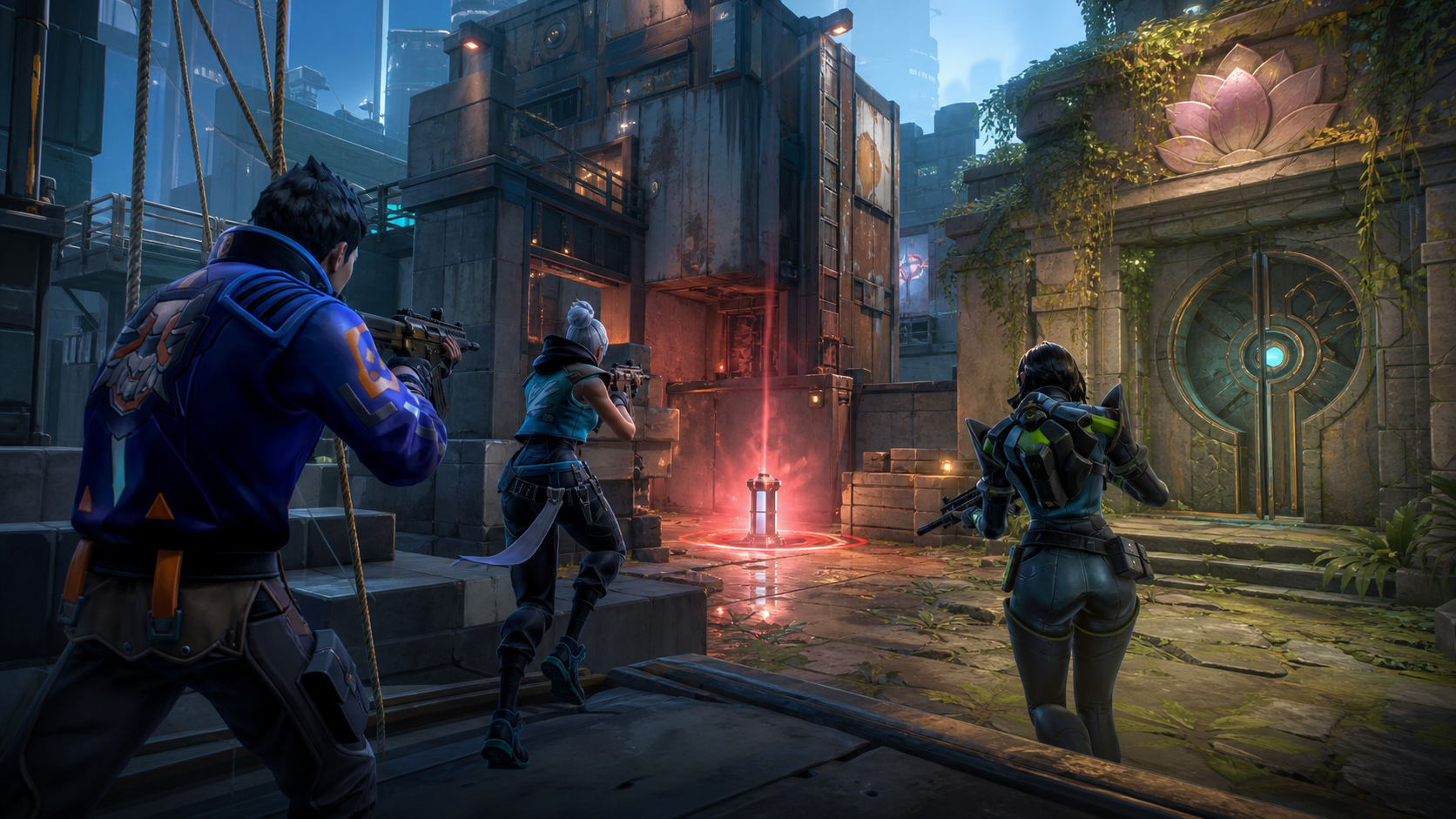
Riot introduced Retake in Patch 13.00 as a limited-time 3v3 mode built around post-plant action. The Spike auto-plants at a visible position chosen from a curated pool, Planters defend, Retakers defuse, sides swap every round, and the first team to five rounds wins. There is no economy. Instead, each player chooses between randomized weapon, armor, and ability-charge card options that escalate over the match.
Patch 13.02, published July 28, expanded that map pool with Split, Corrode, and Lotus. Riot did not publish an official training routine for them, so the drills below are editorial recommendations—not claims about a hidden optimal route or guaranteed rank gains.
What the three new Retake maps actually change
The useful part of this update is not simply having three more backdrops. Each map can expose a different kind of post-plant failure. Split makes high-versus-low clearing discipline visible. Corrode punishes a trio that watches the same lane while leaving another route unaccounted for. Lotus makes route-state communication and close-range trading especially easy to audit.
| Map | One-match focus | Failure to record |
|---|
| Split | Use the same high/low clear order | First unchecked angle, broken trade, or late utility |
| Corrode | Account for every live lane before committing | Unwatched route or isolated first contact |
| Lotus | Call the current route or door state | Unclear entry plan or trader too far behind |
Pick only one row for a match. A win can still contain a failed rep, and a loss can contain a successful one. That distinction matters because Retake randomizes the site, plant position, and card choices. Those variables make match results noisy, but they make adaptation practice useful.
Split drill: make your clear order repeatable
On Split, decide your high/low clearing order before contact. The exact order can change with your entry route and the visible Spike position; the point is that all three players should understand it. One player takes first contact, the next holds the trade, and the third protects the route or prepares utility instead of duplicating the same crosshair.
After the round, name only the first preventable error. Did the first player skip a vertical check? Was the trader unable to see the duel? Did someone die with useful utility still available? Did the team spend so long clearing that the defuse became impossible? Recording the first broken link is more useful than blaming the final gunfight.
Solo version: announce your intended first two checks to yourself and score whether you followed the order. Trio version: say “contact, trade, cover†before moving and rotate those jobs next round. This is not a fixed Split solution; it is a way to make an inconsistent habit measurable.
Corrode drill: track the route nobody owns
Corrode’s Retake addition is a useful map-knowledge test because a rushed team can stack one approach and mistake three nearby bodies for complete coverage. Before the push, identify which route each player owns. If nobody can name the remaining route, the plan is incomplete.
Keep a four-line note after each Corrode round: selected site, visible plant position, location of first contact, and the route your team did not use or watch. Then ask two questions. Did all three players collapse through one lane? Could a second route have created a tradeable pinch without separating the team?
There is no single “correct†Corrode route in the cited patch notes, and the randomized plant prevents one script from covering every round. The goal is lane accountability: spread enough to deny a free angle, but stay close enough that the first duel can be traded.
Lotus drill: communicate state before movement
Lotus rewards a short state call before the retake begins: which route is open, which close space must be cleared, and who follows the first player. Avoid a long strategy meeting while the Spike is ticking. A useful call is one sentence: “Clear close, I trade, third holds the route.â€
If the rep fails, review the plan rather than every missed bullet. Did the team act on different assumptions about the route? Did the first player move before the trader was ready? Did the third player abandon coverage to chase the same fight? That diagnosis remains useful even when the random card choices give you awkward weapons or limited ability charges.
Solo version: make the route-state call anyway and judge your timing, not whether strangers obeyed it. Trio version: require the second player to confirm “ready to trade†before first contact. The extra half-second of clarity is the drill.
A 20-minute Retake routine that produces evidence
- Minutes 0–3: choose one metric. Pick missed first clear, untraded death, utility held at death, or defuse started too late. Do not switch metrics after a bad round.
- Minutes 3–10: play one focused match. Apply the map drill while adapting to the visible plant and the two card options. The constraint is part of the rep.
- Minutes 10–17: repeat or rotate roles. Solo players repeat the same metric. Trios rotate first contact, trader, and cover so one player does not hide inside the easiest job.
- Minutes 17–20: write four numbers. Count the four failure types. Choose the largest count as the focus for the next session.
A compact scorecard prevents “that felt good†from becoming the only conclusion:
- Missed first clear: deaths caused by the first unchecked threat.
- Untraded death: first contacts taken outside a teammate’s useful timing or sightline.
- Utility held at death: rounds where a usable charge remained when you died.
- Late defuse: rounds where indecision, not enemy control, made the attempt too late.
Retake cannot reproduce the economy, information gathering, rotations, and five-player structure of Competitive. It isolates a narrower problem: what your team does after the Spike is planted. Patch 13.02’s three additions are valuable because they let you repeat that problem under different spatial constraints. Measure one decision, review it honestly, and let the next match test the correction.
References














 Quality
