Streamlined three-tier loyalty program where every member enjoys the same high-quality rewards, with benefits escalating at each tier.
Simple yet effective, this program stands as the best deal for Eloking's boosting services, ensuring maximum value and satisfaction for all our users.
Cashback on all Eloking boosts (3%, 5%, 7%)
Discounts for all Eloking boosts (5%, 10%, 15%)
Discount for a friend 🤗
Free daily lootbox spin with industry-leading rewards
Member exclusive season and event offers
League of Legends patch 25.18 support bans and boosting flags
j
Anthony King
Gamer
08 Jul 2026
Posted On
Listen to this post
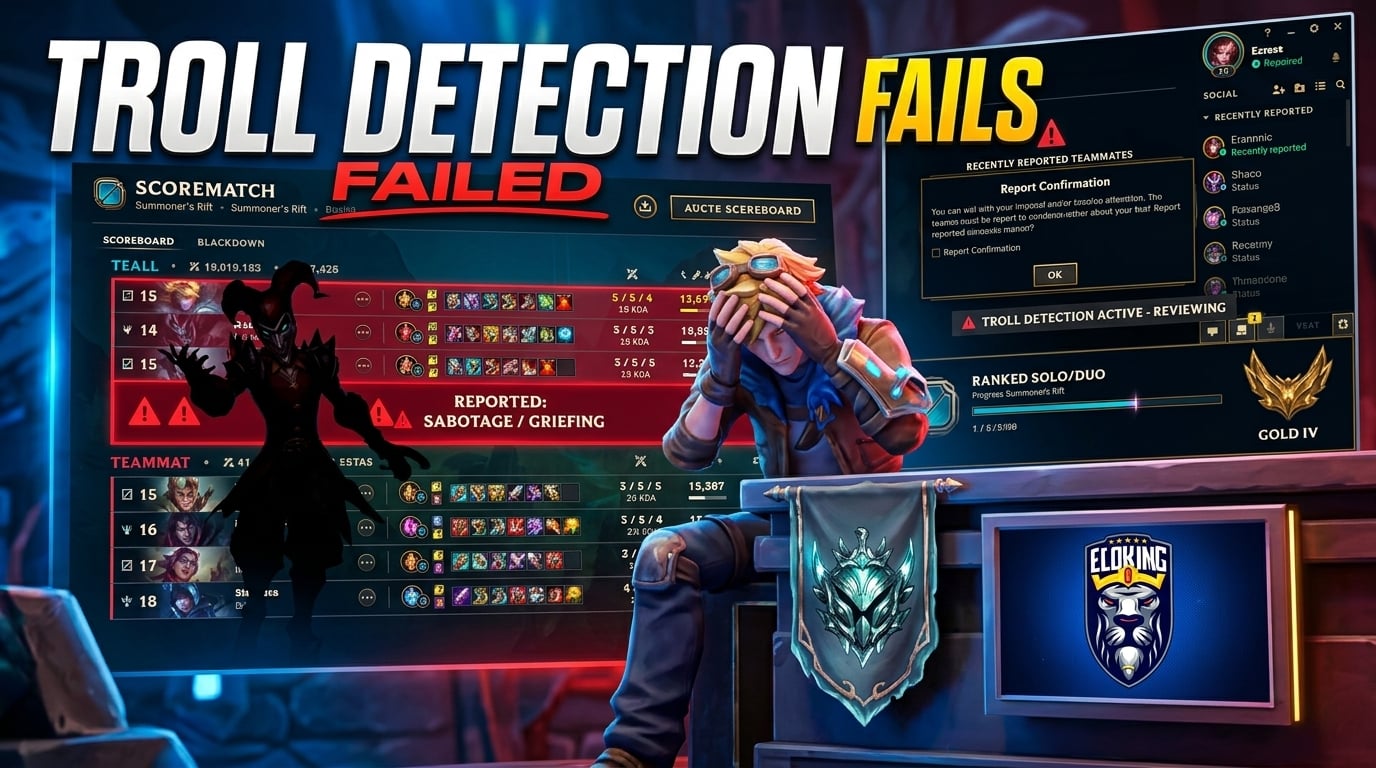
TL;DR: Riot's new ranked enforcement targets suspicious MMR shifts and account behavior, not visible rank, so players can be penalized for boosting, account sharing, or related activity without any obvious warning. The result is widespread panic because bans, suspensions, and restrictions feel opaque and hard to appeal.
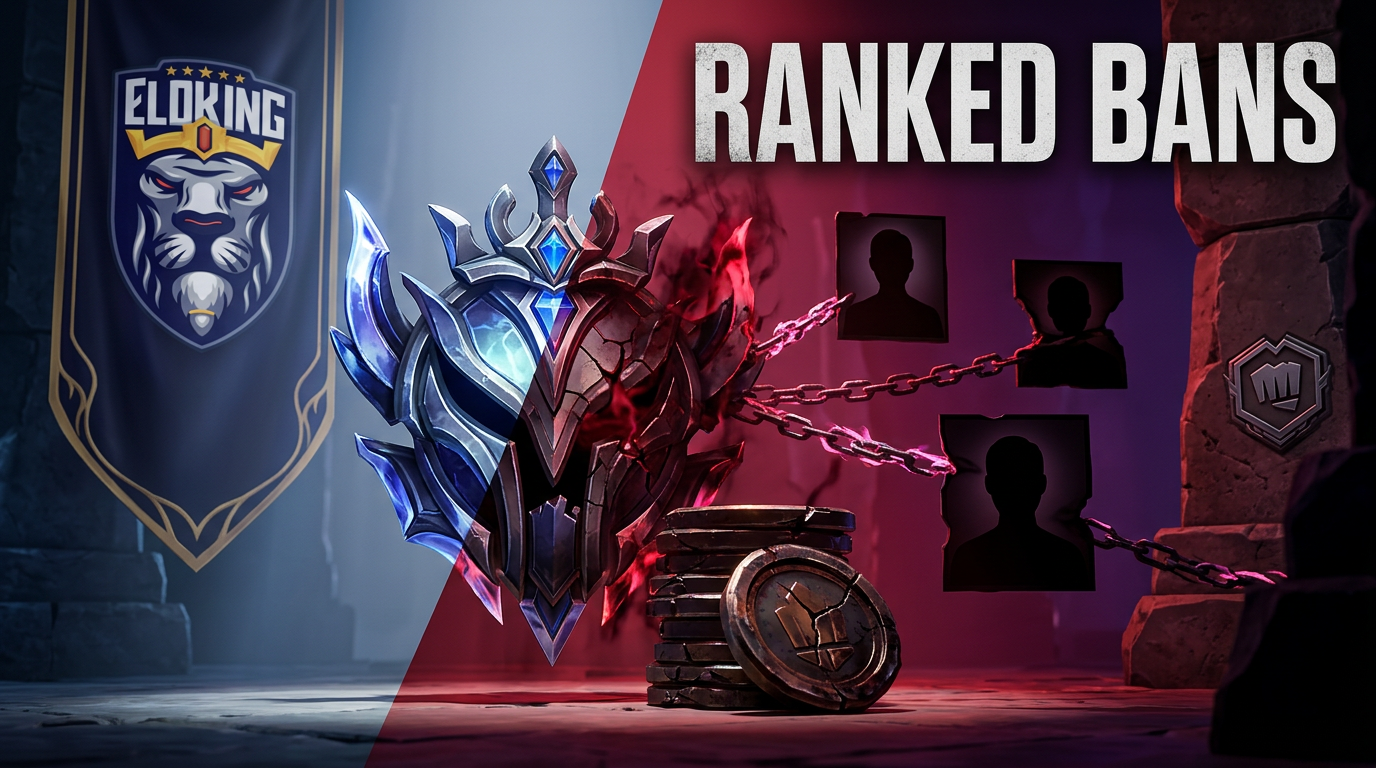
One patch flipped the mood of ranked overnight: players started logging in to find access blocked, and the ban they saw was not always the ban they thought they deserved. Riot says the new wave of penalties looks at suspicious MMR movement and account behavior, not the visible rank badge, which means a player can look completely normal and still trigger a punishment underneath. That is exactly why the panic spread so fast - because from the client side, there is no way to tell whether a flag came from boosting, account sharing, or a system mistake. And once Riot starts linking penalties across accounts it believes belong to the same person, the question stops being "who got banned?" and becomes "why did the detector think this account was part of the same network?"
The most unsettling part is that even Riot's own language leaves players guessing: bans, suspensions, and restrictions all blur together, while the real trigger stays hidden behind MMR patterns and enforcement confidence no one else can see. So when a three-day or 14-day penalty hits, the drama is not just the length - it is the uncertainty of what actually set it off.
Patch 25.18 is where the panic started
The enforcement timeline shifted from theory to reality on September 9, 2025. With the release of Patch 25.18, the Vanguard team began issuing wave-based penalties for behavior dating back to the start of the year. This rollout specifically targeted "hitchhiking" - queuing with a booster to get carried - and "boosting," defined as someone else playing on your profile to inflate your MMR. It also marked the crackdown on purchased or botted accounts and general account sharing.
The punishment ladder itself isn't exactly a slap on the wrist. While "restrictions" act as smaller time-based limits, the devs use "ban" and "suspension" interchangeably for penalties that completely block access. Things escalated further on November 19, 2025, with Patch 25.23, which introduced penalty linking. This system applies punishments across every profile the devs are confident belong to the same individual. When a detection hits, it doesn't just nuke one hardstuck account; it can dark-out an entire network of linked profiles simultaneously.
Struggling to win? Bad teammates?
Purchase a game with one of our PRO players.
One game
Average wait time <30 minutes
$4.00
$3.32 per game
Two games
Average wait time <30 minutes
$8.00
$3.00 per game
Three games
Average wait time <30 minutes
$12.00
$2.50 per game
Detection focuses on MMR patterns, not visible rank
A common misconception is that the system monitors the shiny rank badge on a profile. In reality, the devs track suspicious MMR movement and account behavior patterns. This means a player might look like a standard Gold IV hardstuck on the surface, but unusually large MMR shifts over a short period can trigger a flag. This focus on internal matchmaking data rather than visible rank is why some penalties feel like they come out of nowhere.
The enforcement follows a strict escalation path: a first offense typically triggers a 3-day ban, a second offense leads to a 14-day ban, and a third strike results in a permanent ban. While the Vanguard team maintains that auto-bans only occur with extremely high confidence and that false positives are rare, the lack of transparency regarding these MMR triggers often leaves players in the dark. If a profile is caught in a wave, the only recourse is to contact Player Support to appeal the automated decision.
Why innocent players still get nervous about support bans
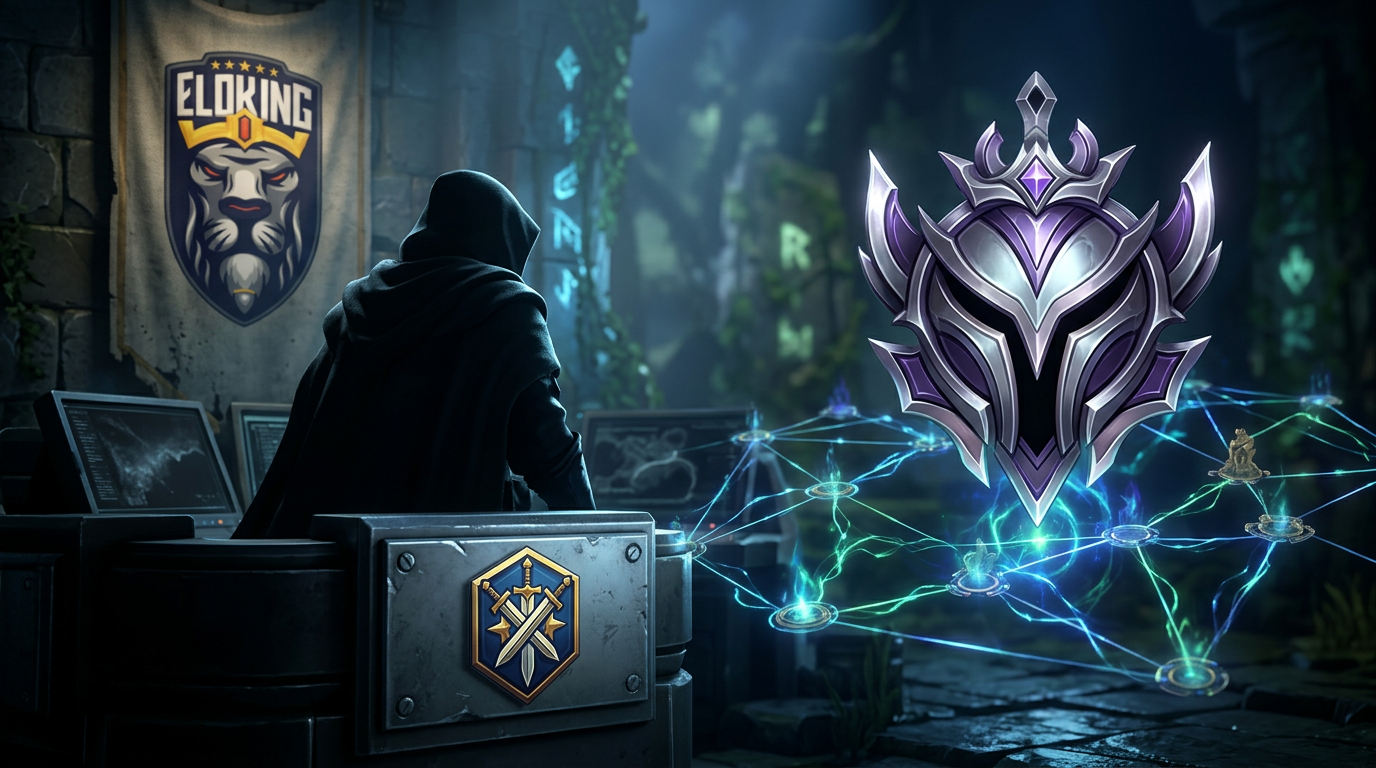
The paranoia comes from the shape of the evidence, not just the punishments. A bad stretch against smurfs, weird queue patterns, account sharing inside a household, or a boosted account recovering to its real level can all look suspicious if you only see the outcome. Riot's enforcement language is centered on MMR-linked manipulation and account-sharing behavior, which leaves players with little visibility into how a specific flag was triggered.
That is why these threads explode. Players see a ban, hear "boosting," and immediately assume they got griefed by the detector. Sometimes they did. Sometimes they were part of the exact behavior Riot is targeting. The problem is that the line between the two is not something players can audit from the client, and that is the part that keeps the fear alive.
Defining "Ranked Manipulation" and Linked Penalties
The official FAQ draws a sharp line between different types of ladder abuse. "Intentional Deranking" involves playing below one's skill level to tank MMR, while "Ranked Manipulation" covers grouping in Flex queue to artificially push an account up. These are distinct from "Boosting," which specifically refers to someone else logging into your profile to play ranked games. Understanding these definitions is key because the devs now link penalties across all profiles they are confident belong to the same person.
This means a 14-day ban for boosting on a secondary "smurf" account can instantly trigger a matching suspension on your main profile. These aren't just account-specific timeouts; they are identity-level restrictions. When the system detects a violation, it doesn't just nuke the game you're in - it revokes access to the entire ecosystem for that player. For those caught in the net, the loss of time and LP is secondary to the total loss of access across their entire account library.
What to do if your profile gets flagged
Audit your login history: Stop sharing your password with that "cousin" who suddenly plays like a Challenger; the system sees the IP and hardware ID shifts instantly.
Check for unintentional "hitchhiking": If you duo-queued with someone who was secretly using a boosted or botted account, you might be caught in their blast radius.
Skip the Reddit tilt-post: Don't just complain to the void; hit up Player Support with specific logs and evidence of your recent play sessions.
Analyze your MMR, not your LP: Look for massive, unexplained spikes in your matchmaking rating that might have tripped the automated "strict parameters" for boosting.
The blunt truth is that boosting flags aren't just for blatant cheaters anymore. They represent a new era of opaque, automated enforcement that can hit normal players who stray into suspicious patterns. While the devs are cleaning up the ladder, a system that feels like it nukes accounts from nowhere will always struggle to maintain the community's trust.
Yes. The enforcement can flag accounts for suspicious MMR movement and linked behavior even when the visible rank badge barely changes. A profile can look ordinary on the surface and still trip a penalty underneath.
Linked penalties can spread across every profile the system believes belongs to the same person. That means a punishment on one account can trigger matching restrictions or bans on other accounts in the same network, even if only one profile was directly used for the flagged activity.
No. Restrictions are time-based limits, while bans and suspensions block access completely. The difference matters because a restriction is a setback; a suspension is a hard stop.
Yes, if the queue pattern looks like hitchhiking or ranked manipulation. Duoing with someone on a boosted, botted, or otherwise compromised account can put a normal player inside the blast radius of enforcement.
Save login history, recent match dates, and any evidence showing who had access to the account. Support appeals are much stronger when they include specific session details instead of a generic complaint.
Not instantly. Wave-based enforcement can land much later than the matches that triggered it, which is why a player may log in weeks after the fact and find access blocked with no obvious warning.

















 Quality
