Streamlined three-tier loyalty program where every member enjoys the same high-quality rewards, with benefits escalating at each tier.
Simple yet effective, this program stands as the best deal for Eloking's boosting services, ensuring maximum value and satisfaction for all our users.
Cashback on all Eloking boosts (3%, 5%, 7%)
Discounts for all Eloking boosts (5%, 10%, 15%)
Discount for a friend 🤗
Free daily lootbox spin with industry-leading rewards
Member exclusive season and event offers
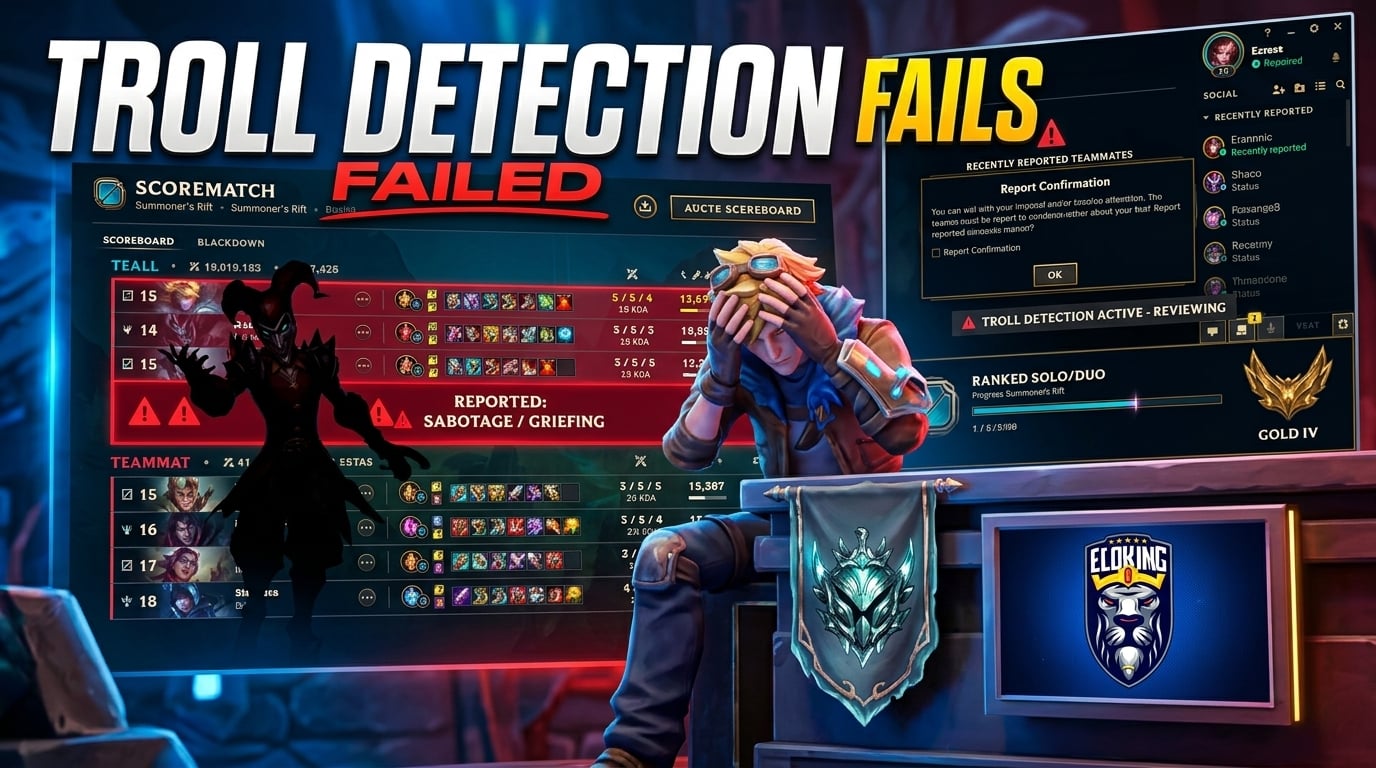
League of Legends Players Are Fed Up With Riot's Troll Detection Not Doing Shit
h
Hamza Rashid
Gamer
01 Jul 2026
Posted On
Listen to this post
TL;DR: Riot's troll detection in League of Legends feels ineffective because players still see griefers, flamers, and saboteurs ruining ranked games with little immediate consequence. A new social-panel update adds visibility into Honor and penalties, but players want faster, meaningful enforcement that protects matches in real time.
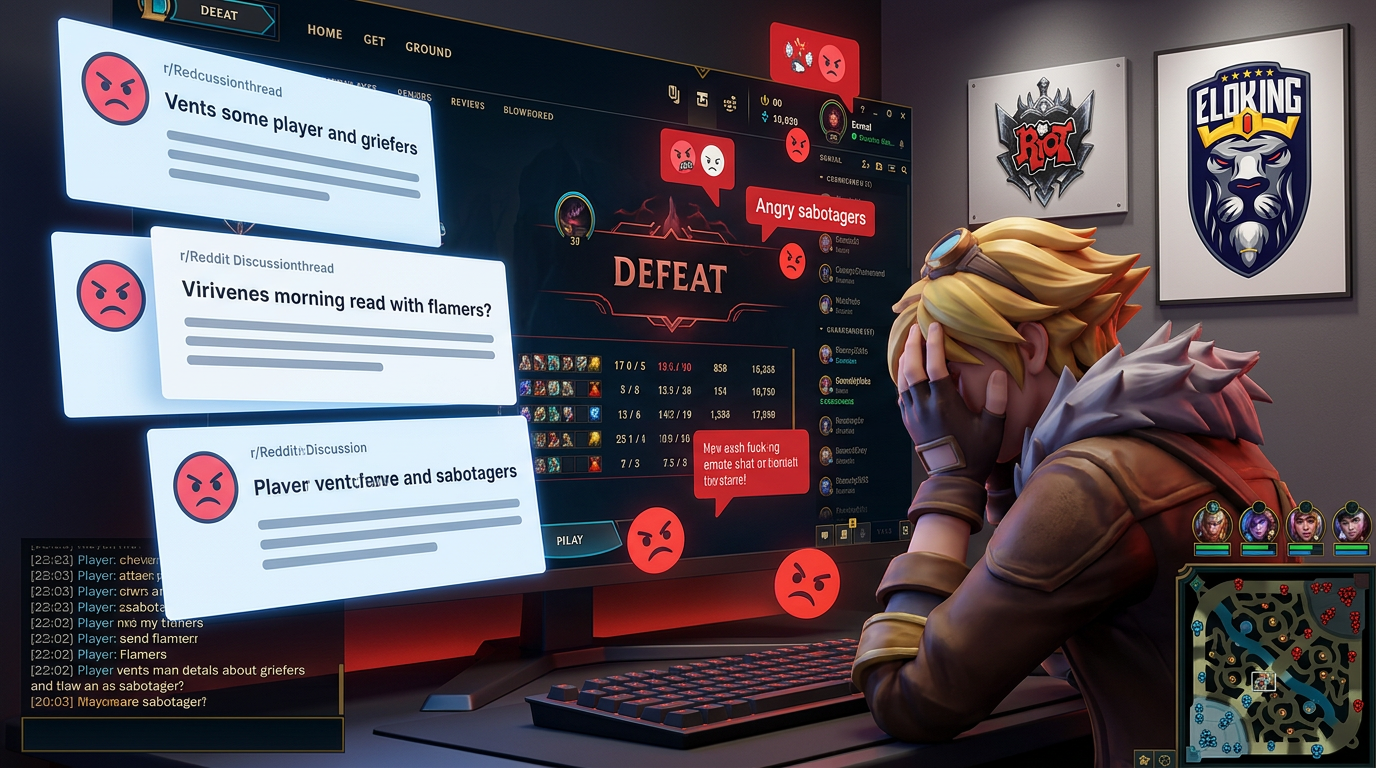
League of Legends players are once again staring at the same infuriating scoreboard: one teammate is obviously running it down, flaming in chat, or sabotaging the match, and Riot's "troll detection" still seems to do absolutely nothing. The rage isn't just about losing a game - it's about the feeling that the system is watching, recording, and still letting the worst behavior slide right past it. When players say they can't tell whether Riot's detection is broken, useless, or simply too slow to matter, the whole game starts to feel rigged against the people trying to play it fairly.
So how did a feature meant to clean up one of the most toxic corners of online gaming become another reason players think nothing will ever change?
Riot troll detection looks better on paper than it does in the competitive ladder
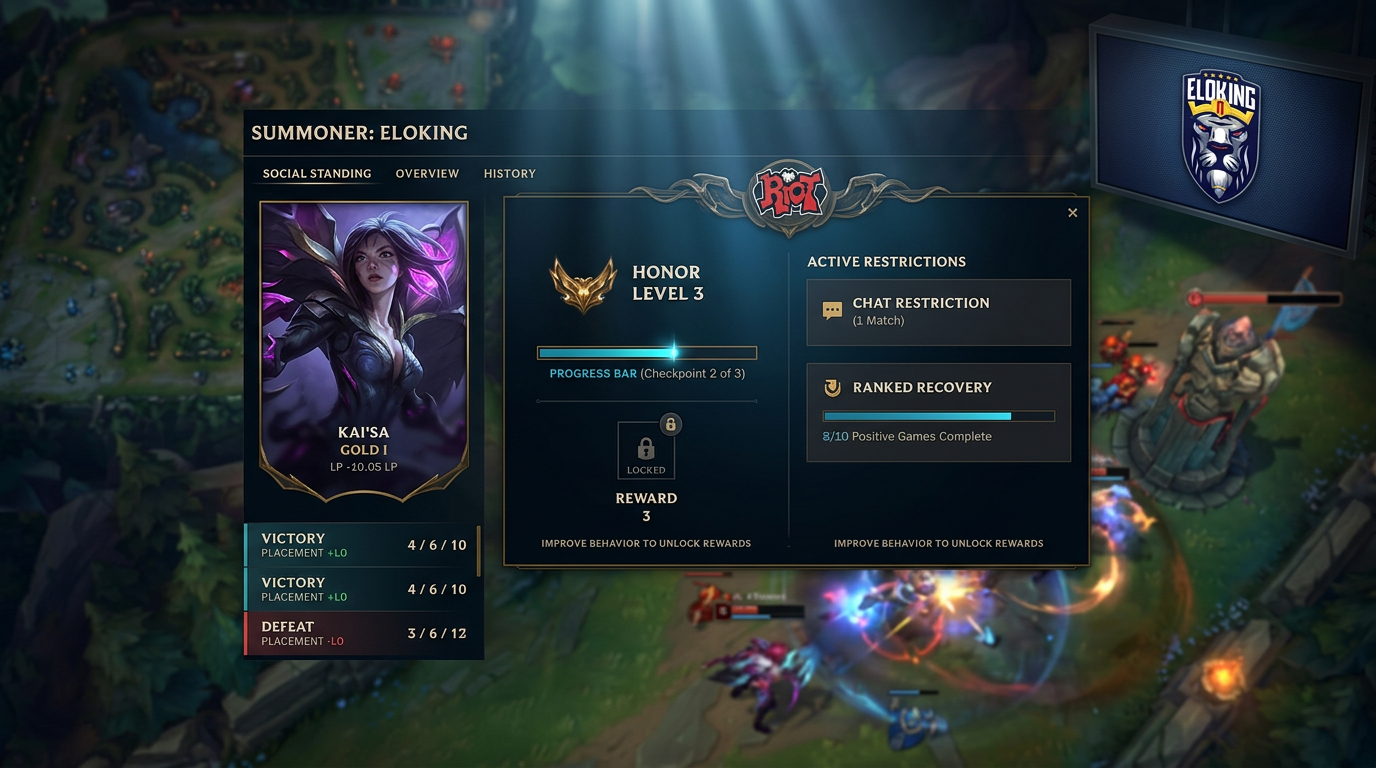
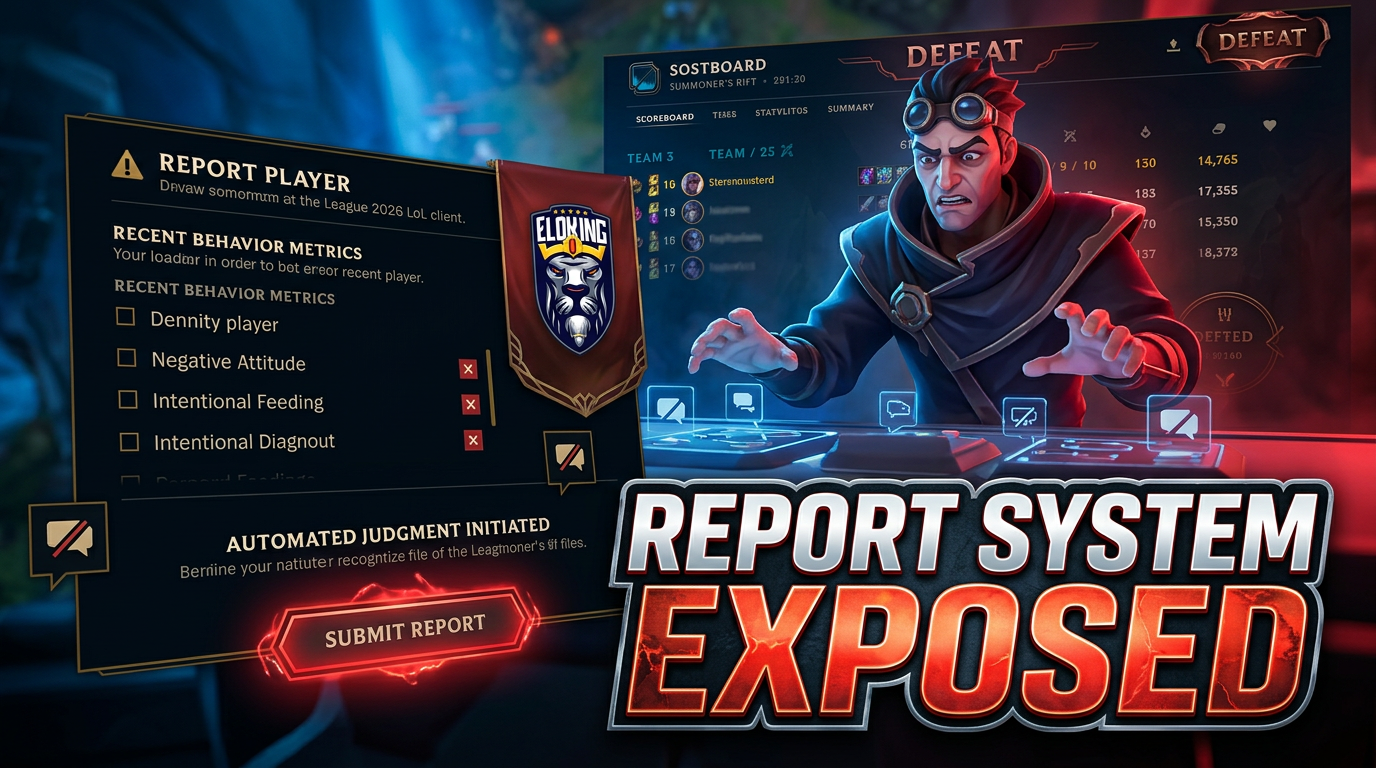
Riot is finally showing its hand. In the League of Legends Patch 26.12 notes, dated June 9, 2026, the developer introduced "Honor and active penalty information" to the social panel. This allows players to track their standing, view progress toward redemption, and see how their behavior impacts the game. The panel displays current Honor levels and the specific actions needed to restore standing. It is a step toward transparency, but for those in the 2026 player complaints cycle, it feels like a cosmetic fix for a structural problem.
Visibility is not the same as enforcement. Players aren't asking for a prettier dashboard; they want griefers removed from the LP grind before a match is ruined. When a system focuses on reminding you of your own standing rather than stopping a teammate from running it down mid, the community's trust in automated detection continues to erode.
Struggling to win? Bad teammates?
Purchase a game with one of our PRO players.
One game
Average wait time <30 minutes
$4.00
$3.32 per game
Two games
Average wait time <30 minutes
$8.00
$3.00 per game
Three games
Average wait time <30 minutes
$12.00
$2.50 per game
Community frustration is boiling over across Reddit
The current outcry isn't just a localized tantrum. On r/leagueoflegends, threads like the "GOO Support" post or players reporting teammates who refuse to use basic attacks highlight a system that fails to catch obvious sabotage. This sentiment isn't limited to the main sub; r/LoLCoaching griefing posts frequently detail how disruptive behavior derails players trying to improve, turning a learning environment into a toxic slog.
This is a recurring message from those on the climb who believe the punishment gap is widening. When the same complaints appear across different communities, the issue stops looking like a string of bad games and starts looking like a fundamental failure of the detection logic. If the system can't flag a support intentionally sabotaging their ADC, players have every right to question if it's working at all.
The technical struggle vs. the player experience
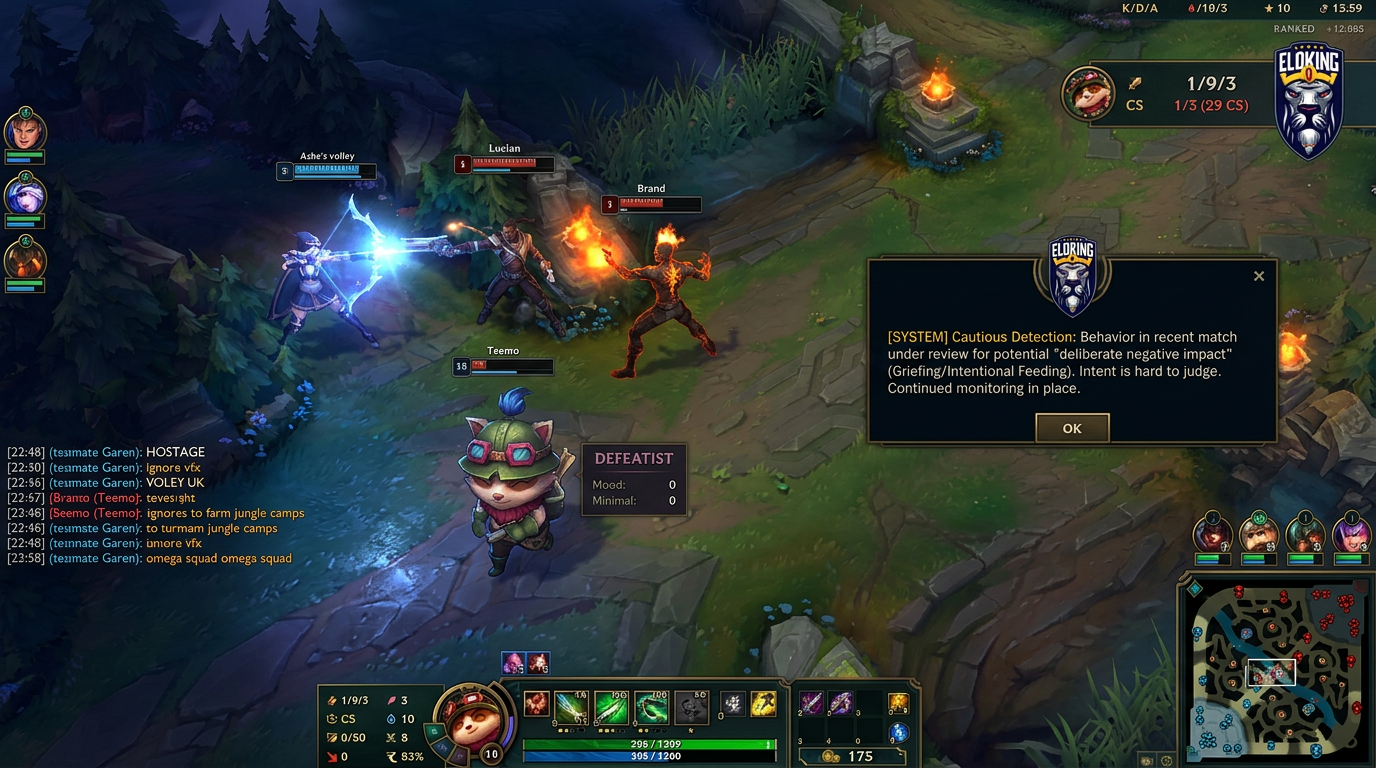
To be fair, automated troll detection is a technical nightmare. Distinguishing between a player having a genuinely terrible game and someone "soft inting" requires an algorithm to understand intent - something even humans struggle to agree on. If Riot tunes the system to be too aggressive, they risk banning thousands of innocent players who simply got outplayed in a bad matchup. This technical hurdle is the primary reason why detection often feels conservative or slow.
However, that explanation doesn't help when you're trapped in a 30-minute match with a teammate who is clearly holding the lobby hostage. The promise of the competitive ladder is that intentional sabotage will be caught fast enough to protect the integrity of the game. Right now, many believe that promise is broken. Every missed report makes the entire system feel ungoverned, leading players to believe that Riot's detection is tuned so loosely that only the most blatant, high-speed "running it down" triggers a response.
The only fix that actually changes the mood of the climb
Riot doesn't need more vague talk about "behavioral systems." To restore faith in the competitive environment, the community needs to see tangible results that impact their current session, not a notification that arrives three games too late. To fix the current atmosphere, Riot should focus on:
Real-time separation: Flagging repeat offenders and separating them from the general population faster.
Transparent enforcement: Moving beyond social-panel stats to show that reports actually result in immediate queue restrictions.
Aggressive detection: Refining the logic to catch "soft" griefing that bypasses current automated filters.
Until these changes happen, players will continue to view the system as a paper tiger. If the LP grind remains this easy to sabotage in 2026, the frustration isn't just "salt" - it's a rational response to a broken experience.
No. The panel shows Honor and penalty status, but it does not stop a live game from being ruined once the sabotage has already started. Players still need enforcement that hits in real time, not a scoreboard of bad behavior after the damage is done.
Soft griefing is the nightmare case: subtle feeding, refusal to help, lane abandonment, and other actions that look borderline until the pattern is obvious. Those cases are harder than blatant running it down because the system has to infer intent from gameplay, not just from one obvious action.
Because reports and detection can feel invisible when the punishment arrives later, if it arrives at all. That delay makes it look like the system is collecting evidence without protecting the current match, which is exactly what frustrates ranked players most.
That risk is real, and it is the reason these systems tend to be conservative. The real problem is not that the logic is careful; it is that careful logic means obvious sabotage can survive long enough to tank a game first.
Immediate queue restrictions for repeat offenders. Once players believe toxic behavior actually carries fast consequences, the whole ladder feels less like a hostage situation and more like a competition.













 Quality
