Streamlined three-tier loyalty program where every member enjoys the same high-quality rewards, with benefits escalating at each tier.
Simple yet effective, this program stands as the best deal for Eloking's boosting services, ensuring maximum value and satisfaction for all our users.
Cashback on all Eloking boosts (3%, 5%, 7%)
Discounts for all Eloking boosts (5%, 10%, 15%)
Discount for a friend 🤗
Free daily lootbox spin with industry-leading rewards
Member exclusive season and event offers
Does LoL Vanguard Brick PCs? Riot Responds
p
Jack Willa
Gamer
03 Feb 2026
Updated On
The moment so many League of Legends players were dreading but also awaiting is finally here; Riot has introduced Vanguard for the MOBA League of Legends. However, while the anti-cheat system is no doubt doing its job to rid the game of cheaters, it seems that isn’t all it's doing.
According to various sources, many players are claiming that Vanguard for League of Legends actually bricked their PCs. We’re here to dive more into this topic to discover whether there’s actually any truth to this matter or if it’s just some players spreading false rumors so Riot doesn’t make Vanguard mandatory.
So, without further ado, here’s whether LoL Vanguard is bricking PCs. Of course, now that cheaters are gone it’s easier than ever to climb the ranks, and by hiring a professional booster from Eloking to get you to the rank you want by using the code “BoostToday” to get a 20% discount you can rank up and save money in the process.
Why did Riot Games add Vanguard to League Of Legends?
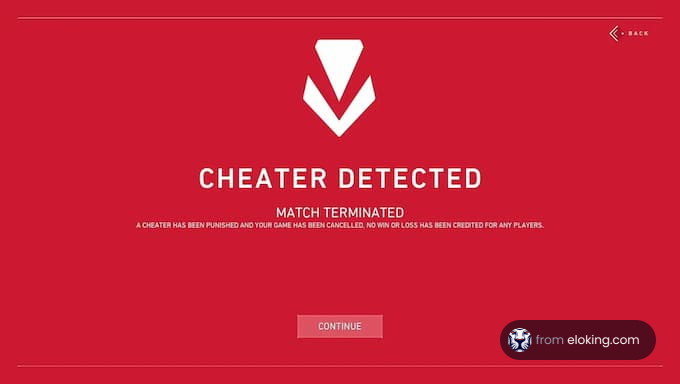
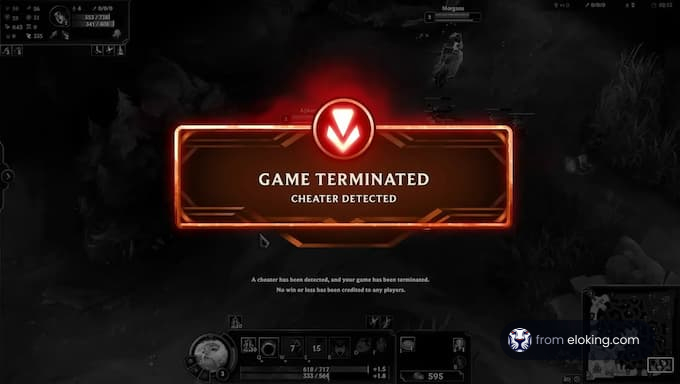
Since Riot has decided to throw in their anti-cheat system from Valorant over to League, let's first talk about the potential reasons they might’ve done this. Firstly, let's all admit that nobody likes a cheater ruining their experience, no matter the game. Adding Vanguard has ensured that fair play is always maintained across each match. Whether it be someone using a script or third-party programs, Vanguard detects it all and makes sure everyone is playing by the rules.
Talking about preventing unfair play, a highly competitive game like League always needed a strict system. Imagine you’re grinding to climb those ranks, and then suddenly you get done and dusted by a cheater, thus pouring water over all that effort. If this starts happening on a wider scale, it could slowly drive the entire community away from the game, hence the need for Vanguard.
While implementing it sounds relatively simple, it was never going to be easy for Riot. Several issues have, and will, arise from this implementation, like privacy, performance, and system compatibility. The Vanguard update is relatively recent, and it usually takes time for the developers to address everything, figure things out, and resolve all reported problems.
Struggling to win? Bad teammates?
Purchase a game with one of our PRO players.
One game
Average wait time <30 minutes
$4.00
$3.32 per game
Two games
Average wait time <30 minutes
$8.00
$3.00 per game
Three games
Average wait time <30 minutes
$12.00
$2.50 per game
Is Vanguard bricking PCs?
If you’re unfamiliar with ‘bricking’, it refers to a situation where a piece of hardware, such as a motherboard or graphics card, sees its last light and becomes unusable, essentially turning into, well, a ‘brick’. Several things can cause a brick, such as a faulty software update, physical damage, improper modifications like overclocking, and power issues like an electrical spike. Our case however is connected to Riot’s anti-cheat software.
Despite several claims of Vanguard bricking hardware, Riot Games, in a subreddit post, has denied confirming any instances of this happening. In the post, Riot claims to have looked into a few cases and has not claimed responsibility for any hardware failures.
“We’ve individually resolved a few of the major threads you may have seen so far of users claiming this with their machines and have confirmed that Vanguard wasn’t the cause of the issues they were facing.”
The post further goes on to state that Riot encountered a small issue where enabling TPM 2.0 and switching to UEFI mode was causing problems for a few players, mainly due to differences in BIOS settings and partition types. They suggested that players who enable TPM 2.0 and switch to UEFI should have their Windows 11 installed on a GPT partition, and in case of an MBR partition, they should use a Microsoft tool to make the transition easier. The post further confirms that Vanguard cannot tamper with the bios settings.
“This requires a change to a BIOS setting, which differs based on the manufacturer. Vanguard does not and cannot make changes to the BIOS itself.”
Another potential cause for a hardware issue caused by BIOS settings was enabling SecureBoot. Riot mentions interacting with a player who used a set of custom settings to enable it, which ended up causing an issue. While Vanguard does use SecureBoot on Valorant, Riot decided not to implement it for League. As the majority of the player base uses older hardware, there would’ve been a lot more compatibility issues at hand had it been used.
FAQs
Riot added Vanguard to League to combat cheating and ensure fair play. It detects scripts and third-party programs, preventing unfair advantages and maintaining a competitive environment.
Riot denies that Vanguard bricks PCs. They've investigated claims and found Vanguard wasn't the cause. Issues may arise from enabling TPM 2.0 or SecureBoot with incorrect BIOS settings.
Players are reporting issues like blue screens, restart prompts, and disabled touch screen drivers. Riot is working to address these compatibility problems, but it may take time to resolve them all.






















 Quality
