Streamlined three-tier loyalty program where every member enjoys the same high-quality rewards, with benefits escalating at each tier.
Simple yet effective, this program stands as the best deal for Eloking's boosting services, ensuring maximum value and satisfaction for all our users.
Cashback on all Eloking boosts (3%, 5%, 7%)
Discounts for all Eloking boosts (5%, 10%, 15%)
Discount for a friend 🤗
Free daily lootbox spin with industry-leading rewards
Member exclusive season and event offers
Overwatch 2 internal MMR vs rank explained
h
Hamza Rashid
Gamer
12 Jul 2026
Updated On
Listen to this post
TL;DR: Overwatch 2 matches are built from hidden MMR, not your visible rank, so a badge can improve while lobbies still feel uneven. Blizzard's updates aimed to make matchmaking fairer and more transparent, but real climb depends on sustained wins, recency, and rating changes behind the scenes.
You win three straight games, your rank barely moves, and the lobby still feels wildly one-sided - so what is Overwatch 2 actually using to decide who you face? That disconnect is where the confusion starts, because matchmaking and rank are not the same thing, and they do not always move together. If you've ever wondered why a match can feel brutally unfair even when your rank looks fine, the answer is hiding in the gap between what the game measures and what it shows.
The twist is that your visible rank may be telling only part of the story while the matchmaking system is quietly using something else entirely. Once you see how those two systems work against - or sometimes with - each other, the whole ladder starts to make a lot more sense. But the real question is whether that "fair" match you're waiting for is being decided by your rank at all.
What is the difference between your visible rank and Overwatch 2's hidden matchmaking rating?
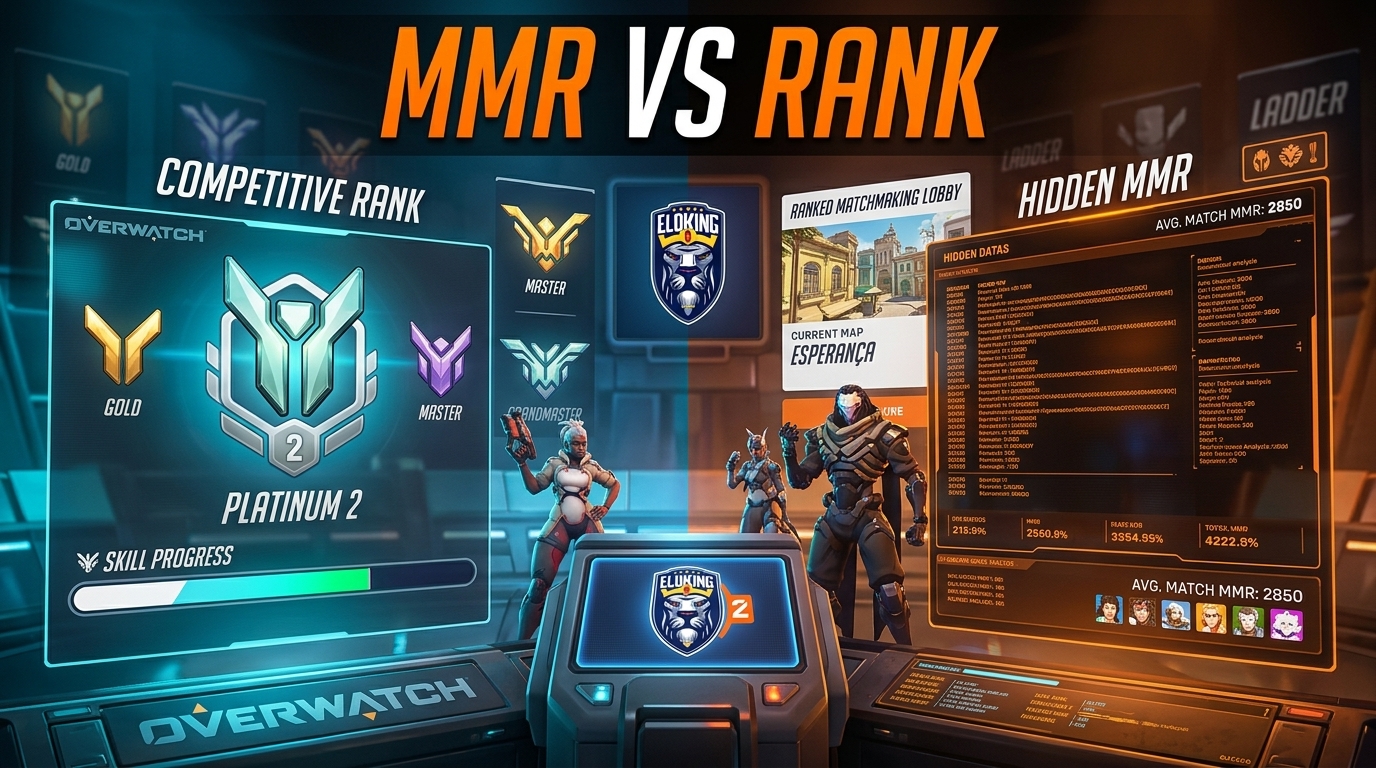
Official developer blogs clarify that every player has an internal MMR, a numerical value describing skill relative to the entire community. This hidden rating is the only factor used to form matches. The studio explained that the game never uses your outward-facing skill tier or division - from Grandmaster down to Bronze 5 - to build a lobby.
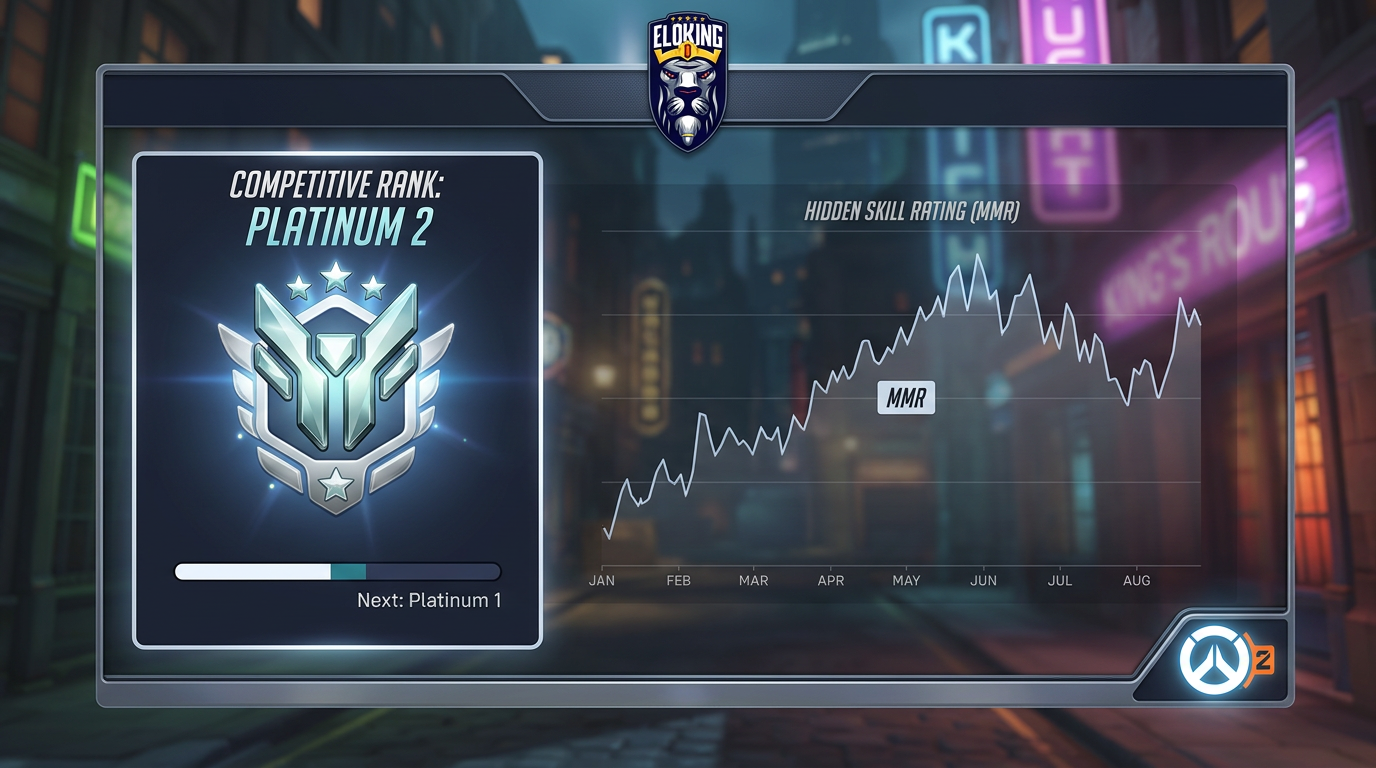
This creates a disconnect because your displayed rank is a public progress indicator that can be reset or decayed independently of your actual skill. While a seasonal reset might drop your visible badge, your internal MMR remains unaffected, ensuring you still face opponents of a similar caliber regardless of what your profile shows.
Struggling to win? Bad teammates?
Purchase a game with one of our PRO players.
One game
Average wait time <30 minutes
$4.00
$3.32 per game
Two games
Average wait time <30 minutes
$8.00
$3.00 per game
Three games
Average wait time <30 minutes
$12.00
$2.50 per game
What did Blizzard's Season 5 Competitive Play Update actually change about matchmaking and rank?
The June 22, 2023 update, titled 'Competitive Play Update - Teaming up for better matches', introduced several transparency features to address matchmaking confusion. The developers noted that the UI now provides a "matching rank" to show how close each player is to the average skill rating of the lobby. This update also added a progress bar showing exactly where you stand in your skill division and how close you are to the next rank.
Beyond UI changes, the studio refined role-based matchmaking to pair players of similar ratings within each specific role. To further improve match quality, the system began prioritizing placing similar groups with wide skill ranges against each other. While this can increase queue times for large groups, it prevents solo players from being overwhelmed by highly coordinated stacks. These changes followed the Season 3 shift that increased the frequency of competitive updates from 7 wins or 20 losses to 5 wins or 15 losses.
How is skill rating updated after each match?
Official blog posts have clarified that while your internal MMR updates after every game, personal performance stats like healing or damage numbers do not affect the calculation. Instead, the system focuses on wins, losses, and the relative strength of your opponents. If you defeat a team with a higher average rating, your MMR will increase more significantly than if you beat a weaker team.
The studio also considers how new you are to the game and how frequently you play a specific mode. For new accounts, the matchmaker adjusts ratings aggressively to find the correct skill bracket quickly. Conversely, inactive players experience MMR decay, which is tracked per role. If you ignore a specific role for a long period, the system becomes less certain of your skill and pulls your rating down to ensure you aren't placed in matches that are too difficult upon your return.
How do you tell whether your climb problem is real or just a rank/MMR mismatch?
Check more than one session before deciding anything. One bad night can make normal variance feel like a system problem.
Compare your rank movement with your match quality over time. Blizzard's transparency changes were meant to make that easier to read.
Pay attention to breaks in play, because Blizzard said inactive players can have lowered MMR.
Look at whether your matches feel consistently stronger or weaker, not just whether a single lobby felt unfair.
Use replays if you want to separate actual improvement from match-to-match noise.
Why does Bronze 5 feel different from every other rank?
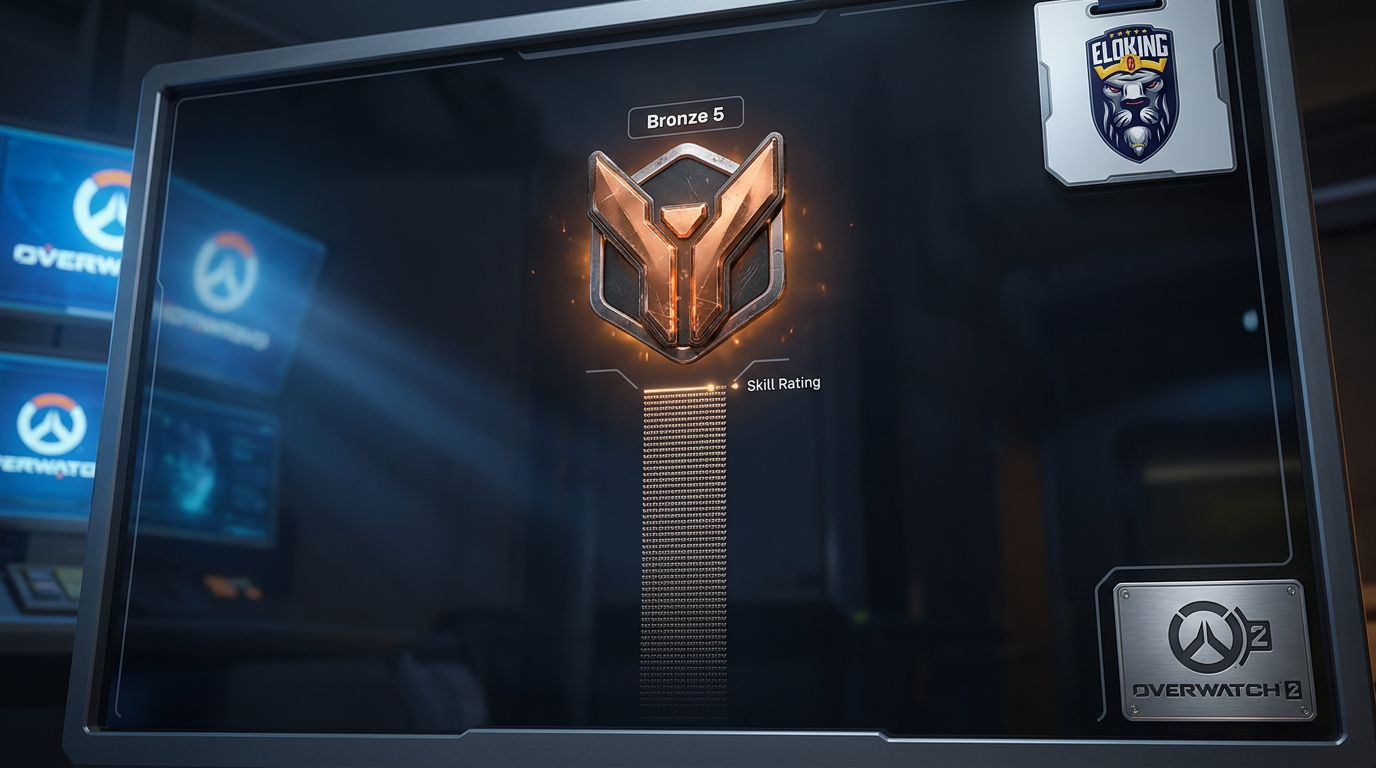
Blizzard has said more players ended up in Bronze 5 than it wanted, and it linked that issue to MMR decay for inactive players. That makes Bronze 5 a place where visible progress can feel especially hard to read.
Blizzard also said it started making incremental adjustments in Season 5 to help more players climb out without disrupting the rest of the curve. The safest conclusion is not that Bronze 5 is broken in every case, but that Blizzard recognized it as a distribution problem worth adjusting.
If you are stuck there, the most reliable thing to track is whether you are actually winning more often over time, not just whether a single badge update feels satisfying.
What should you expect from Team Queue instead of solo or duo queue?
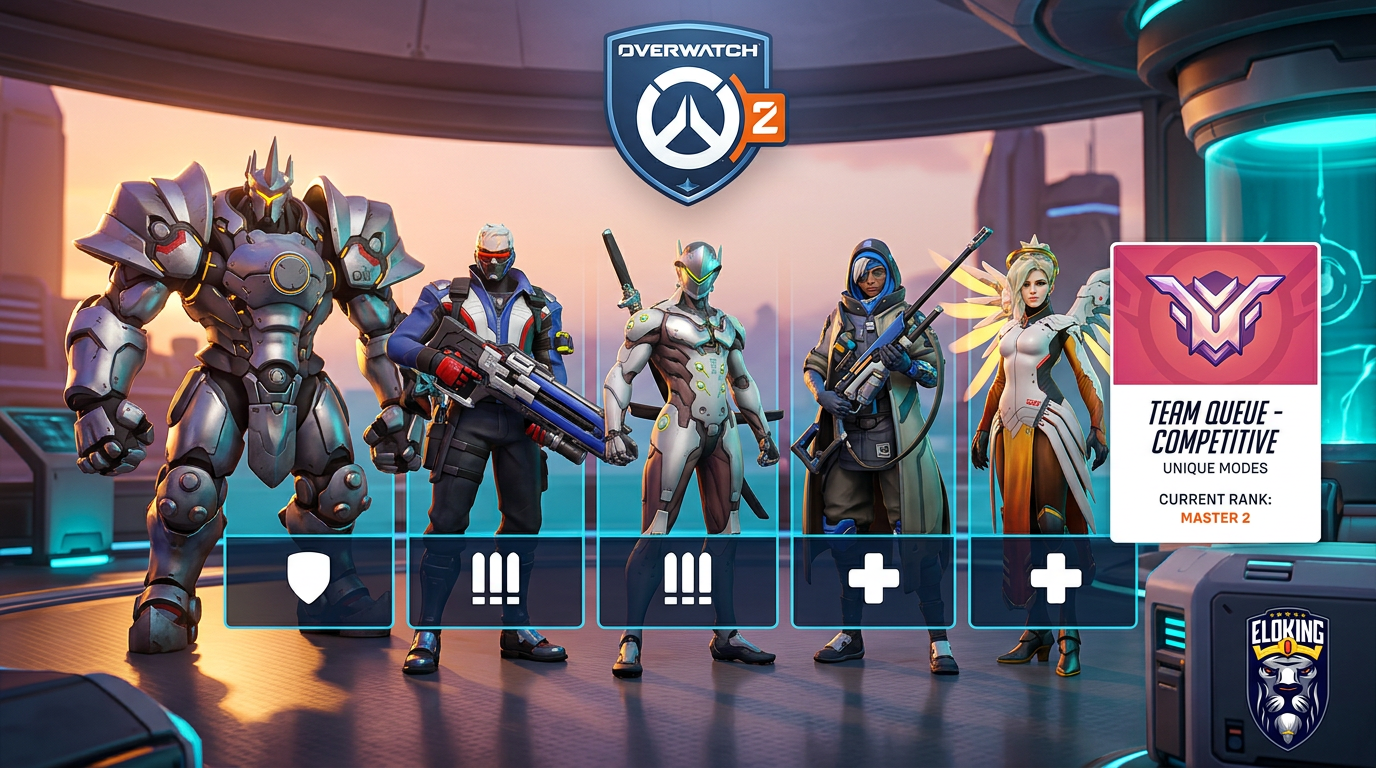
Team Queue is a distinct competitive mode designed specifically for full five-stack groups. Unlike the standard ladder, this mode has no grouping restrictions, allowing friends of vastly different skill levels to compete together. However, it still enforces a role lock (one Tank, two Damage, two Support) and requires a complete party of five to enter the queue.
Because Team Queue uses a separate skill rating, your performance here won't impact your primary Role Queue or Open Queue ranks. It is the ideal environment for coordinated team play, but solo or duo players should stick to the main competitive modes for a more accurate reflection of individual progression.
Final Takeaway: How to read your rank
To avoid frustration, stop tracking your rank badge session-by-session. Because the visible rank can lag behind your actual skill or be influenced by seasonal resets, it is a poor indicator of immediate progress. Instead, use the lobby average rank shown at the start of a match to gauge where the matchmaker actually thinks you belong. If you are consistently placed in lobbies above your current badge, the system is already trying to pull you upward.
Visible rank is a progress badge, not the thing building the lobby. Hidden MMR is what actually drives matchmaking, so two players wearing the same division can be sitting on very different internal ratings and still get very different games.
No. The system cares about match outcomes and the strength of the opposition, not stat-padding, so a huge scoreboard line does not buy extra rating by itself. Beating stronger teams moves the needle more than farming numbers in a loss.
Inactive players can see their MMR decay, and that decay is tracked per role. That means a return after a long break can put you into easier-looking or more uncertain lobbies until the system relearns your current level.
A reset can change what players see without instantly changing the hidden skill estimate behind the scenes. The result is a weird lag where the badge moves on one pace and the matchmaker keeps working off a more stubborn number.
Yes, especially when the stack has a wide skill spread. The matchmaker tries to pair similar group profiles against each other, which helps protect solo players but can also stretch queue times for large parties.
What’s next?
Ready to level up your gameplay and climb the ranks in Overwatch 2? Purchase our top-notch Eloking Overwatch 2 Boost now and dominate the competition like never before!
Purchase Overwatch 2 Boost
and start playing at the rank you deserve!
















 Quality
