Streamlined three-tier loyalty program where every member enjoys the same high-quality rewards, with benefits escalating at each tier.
Simple yet effective, this program stands as the best deal for Eloking's boosting services, ensuring maximum value and satisfaction for all our users.
Cashback on all Eloking boosts (3%, 5%, 7%)
Discounts for all Eloking boosts (5%, 10%, 15%)
Discount for a friend 🤗
Free daily lootbox spin with industry-leading rewards
Member exclusive season and event offers
Path of Exile Players Want to Block Bad Content and the UI Is Still Fighting Them
p
Jack Willa
Gamer
07 Jul 2026
Posted On
Listen to this post
TL;DR: Path of Exile's Atlas still makes avoiding unwanted content feel like a second build: players must spend points, route carefully, and manage blocks just to get the control the game promises. The real issue is endgame UX - clarity and friction remain high, so "choice" still feels like admin.
By the time the Atlas is supposed to be making Path of Exile feel more like a choice, players are still being told to spend points, check layouts, and block mechanics they do not want just to make the promise real. That's the strange thing: the game promises control, then charges you for every inch of it. If saying "I don't want this" takes more planning than running the content itself, what exactly is the interface helping with?
The frustration gets sharper because this is not some old complaint buried in the past; the UI and endgame clarity issues are still being actively discussed and patched. With 138 Atlas Passive Points, four Voidstones, and a whole system built around preference, the real tension is whether Mirage actually streamlines anything or just turns refusal into admin. And once you see that, the question becomes unavoidable: why does escaping bad content still feel like a build?
PoE keeps advertising control, but the interface keeps making control expensive
The clean pitch is easy: build the Atlas around the content you like, cut the garbage, and run maps on your terms. That sounds great until you actually sit down to do it. Then it becomes point-spending, layout-checking, mechanic blocking, and a pile of extra decisions before you even get to the fun part. The game does not lack tools. It lacks a clean way to make those tools feel like a real choice instead of a chore.
The Mirage Atlas is supposed to be streamlined, and GGG clearly wants players to feel more agency. But the 3.28 guide still has to tell you to "block mechanics you don't want," which is the tell. If the system were truly clean, players would not need a guide to turn that promise into something practical. They would just play.
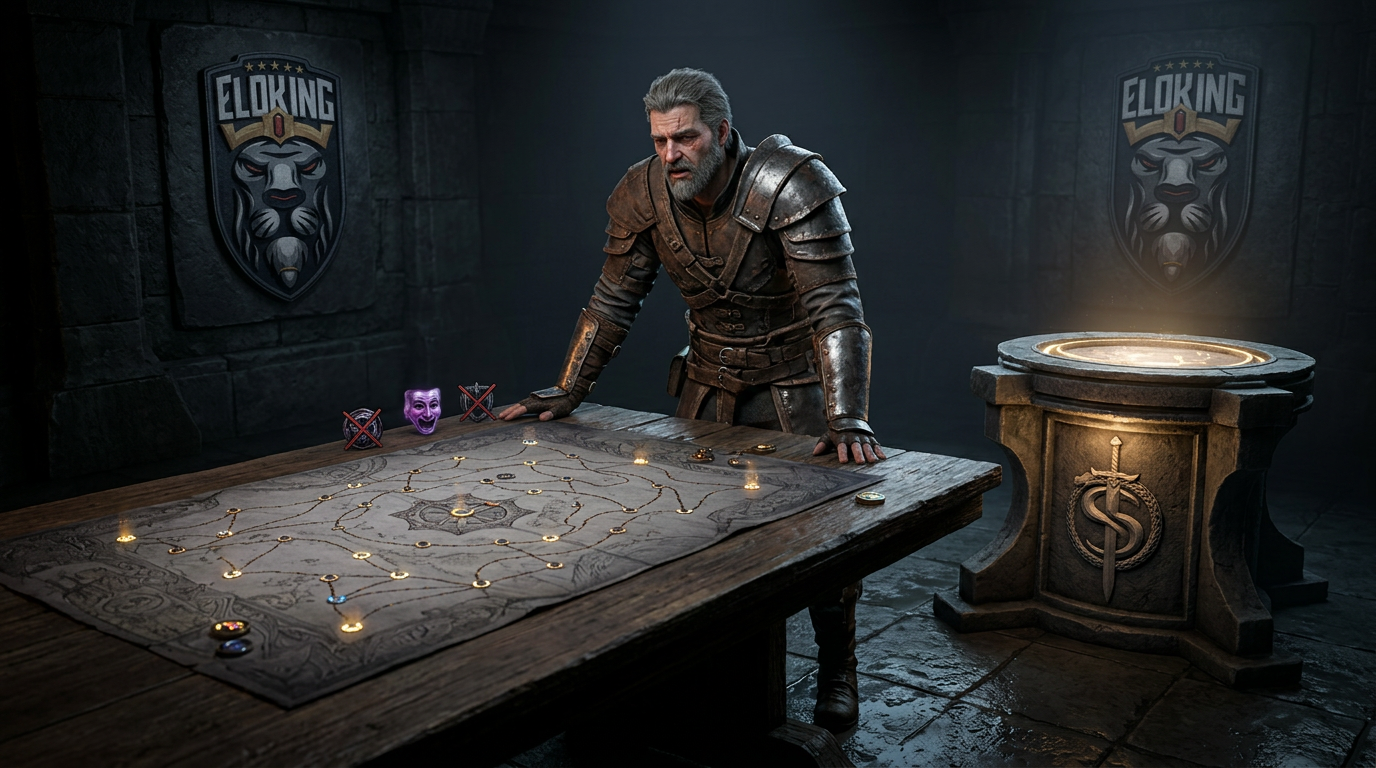
And that is the punchline. When a player has to treat content avoidance like a build on its own, the interface has stopped supporting intent and started demanding maintenance. You are not expressing preference anymore. You are filing paperwork.
Why the current complaint is really about endgame UX, not just one bad menu
June 18, 2026 is not ancient history. A Path of Exile 2 podcast episode titled "PoE2 0.5 Nerfs GOOD, UI BAD!" framed the discussion around patch 0.5 first-week impressions, and its chapter list spells out the frustration: "Ritual UI Problems and Endgame UX Issues" and "Content Bloat Concerns and Future Leagues." That is not one person whining about one screen. That is a current complaint about the whole endgame experience.
The bigger point is attention. Endgame friction is not just about whether a menu looks ugly. It is about whether the game makes it easy to understand what is happening, what to avoid, and how to keep the stuff you hate from wasting your time. When the UI is muddy, content bloat becomes worse because the player has to spend brainpower just to sort signal from noise. That is especially nasty in a game where every league piles on another layer of "maybe this matters."
PatchBot's 0.5.4b notes show the same problem still being actively worked on. They call out "a number of visual telegraphing improvements" for the Arbiter of Divinity fight and say more improvements are coming later for the Vessel of Kulemak boss fight. In plain English: clarity is still a live issue. The game is still tuning feedback, still cleaning up read clarity, still trying to make dangerous stuff readable instead of smug. That is exactly why the UI complaint sticks. It is not solved. It is ongoing.
The 138-point Atlas and four Voidstones sound empowering until you have to organize them
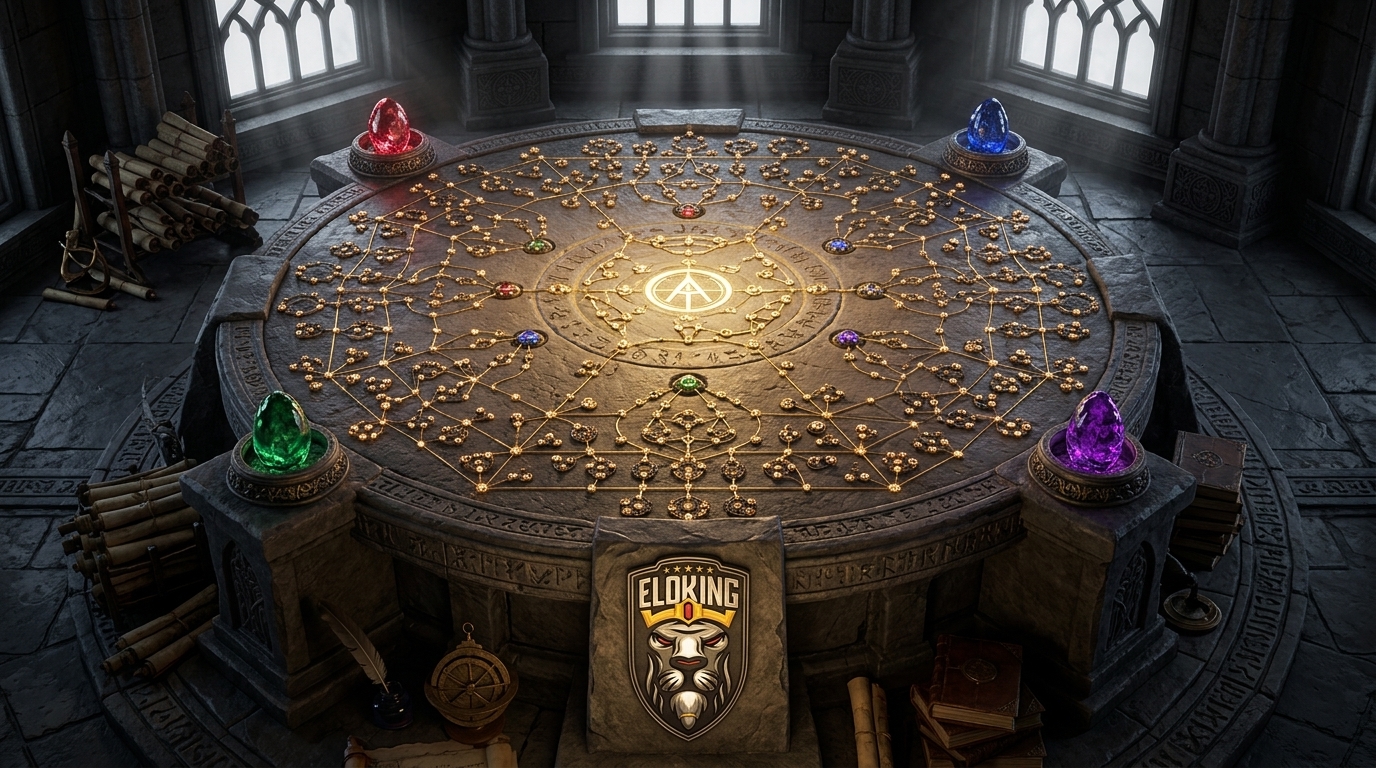
Up to 138 Atlas Passive Points is a lot of room to build around your tastes, and four Voidstones anchoring the corners sounds like a proper endgame framework. But freedom is not free when every bit of it needs to be organized. More points means more possible paths, which means more planning, more tradeoffs, and more chances to screw up a tree just to avoid the content you hate.
That is where the Atlas stops feeling like a power fantasy and starts feeling like admin. The guide language around Mirage even reflects that. Players are told to think about what they want to run, what they want to block, and how their Atlas should be shaped before they actually farm. The Atlas starts from the center, all content is physically placed on it, and the player has to build the route through that space with intent. That is clever. It is also a lot of bookkeeping for something that should be simple: "I do not want this mechanic in my maps."
And that is the real trap. A system can be deep and still be annoying. In Mirage, the game rewards preparation more than improvisation, which means the player who wants clean, low-noise mapping has to become an Atlas planner first and a mapper second. That is not bad design in a vacuum. It just proves the interface has made refusal into a project.
What players actually want from "block mechanics you don't want"
Clear blocks - If I say I do not want a mechanic, the game should make that exclusion obvious and durable, not something I have to re-check like a broken setting. One clean toggle. Then leave it alone.
Fast routing - The Atlas should let me move from "I know what I hate" to "it is gone" without making me dig through a mini spreadsheet of point trades, and it should not feel like I am rebuilding the whole endgame just to escape one bad layer.
Legible defaults - A sane default setup matters because many players do not want to rebuild their whole endgame just to remove one bad layer. Keep the first pass usable, then let the optimizer go deeper.
Low-click control - If the Map Device can open the Atlas directly, the rest of the blocking flow should be just as smooth instead of turning into a menu maze. Short path, clear result.
Persistent intent - The system should remember what I meant, not make me prove it again every time the endgame shifts under me, because nothing kills momentum faster than doing the same setup twice.
Less cognitive tax - Players are happy to optimize when optimization feels rewarding, not when it feels like homework before the real game starts. That distinction matters more than raw depth.
So what should a Mirage League-era player do with this frustration?
Audit - Open your Atlas plan and name the mechanics you actually want to see, because vague goals turn into wasted points fast. Do the quick check first.
Block - Spend your Atlas setup around the junk you hate first, because defensive planning is safer than trying to patch the tree later, and later usually costs more.
Verify - Check that your exclusions still match your farming goal, since a bad assumption about the Atlas will waste more time than a bad map ever will. One mismatch can undo a whole plan.
Simplify - Keep the plan as lean as possible, because the more you overbuild around content blocking, the more the game has already won and the less value you get from the system.
Rebuild - If the setup starts feeling like a chore, change the plan instead of forcing yourself to tolerate a bad route for the sake of "efficiency." Short-term pain is not strategy.
Notice - Treat every workaround as evidence, because if the best way to avoid bad content is still this fiddly, the UI is the thing failing you. That is the signal.
The next big PoE endgame shift will not be judged by how many systems it adds. It will be judged by whether players can say "no" to bad content without needing a guide, a reset, and a little prayer. If the game still makes refusal feel like work, the Atlas is not giving you control. It is billing you for it.
Yes, and that is the nuisance. The system hands you broad control but still makes single-mechanic avoidance cost points, routing, and attention, which turns a simple preference into a full setup decision.
Because the friction is not just in the tree, it is in the whole flow around it. The player still has to identify the problem, spend the points, and verify the result, so the act of saying no never becomes as clean as it should be.
You lose time fast. A stale setup can quietly drag unwanted content back into maps, so the practical fix is to recheck exclusions whenever the endgame shifts and treat the plan like something that needs maintenance, not a one-time choice.
Only if the complexity pays off in speed and clarity. When most of the effort goes into managing exclusions instead of improving drops or map flow, the optimization starts looking like paperwork with extra steps.
Assume the setup is not finished until you verify it in practice. A clean-sounding Atlas plan means nothing if the in-game result still leaves ambiguity, because unclear feedback is exactly how bad content slips back in.
What’s next?
Now that you have learned something new - it’s time you start playing and get better. Choose a game to purchase Eloking Boost for.
Purchase ELO Boost at Eloking
and start playing at the rank you deserve!
















 Quality

