Streamlined three-tier loyalty program where every member enjoys the same high-quality rewards, with benefits escalating at each tier.
Simple yet effective, this program stands as the best deal for Eloking's boosting services, ensuring maximum value and satisfaction for all our users.
Cashback on all Eloking boosts (3%, 5%, 7%)
Discounts for all Eloking boosts (5%, 10%, 15%)
Discount for a friend 🤗
Free daily lootbox spin with industry-leading rewards
Member exclusive season and event offers
Dota 2 Ranks Explained: Every MMR Tier from Herald to Immortal
j
Anthony King
Gamer
15 Feb 2026
Updated On
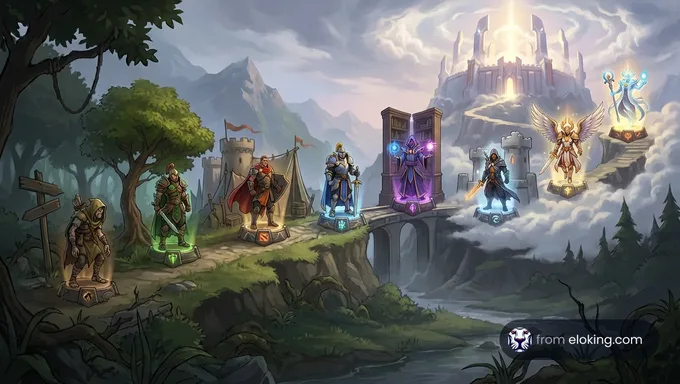
Dota 2 uses eight rank tiers - Herald, Guardian, Crusader, Archon, Legend, Ancient, Divine, and Immortal - each tied to specific MMR (Matchmaking Rating) ranges. Most ranks have five sub-tiers (I through V), creating 36 visible ranks plus the leaderboard-based Immortal tier. Archon is the most populated rank at roughly 22-23% of players.
Key takeaway: Your MMR changes by approximately 30 points per solo win or loss and 20 per party match. To rank up one full tier (e.g., Guardian to Crusader), you need roughly 770 MMR, which translates to about 26 net solo wins.
If you’ve jumped into ranked Dota 2 and have no idea what your medal means, you’re not alone. The ranking system isn’t complicated once you understand it, but Valve doesn’t exactly spell it out for you. This guide covers every tier, the MMR ranges behind them, how calibration works, and what percentage of players sit at each rank.
If you want to skip the grind entirely, Eloking’s Dota 2 MMR boosting pairs you with high-MMR players who can push your account to your target rank efficiently.
All Dota 2 Ranks and MMR Ranges
Here’s the complete breakdown of every rank tier and the approximate MMR you need to reach it:
Struggling to win? Bad teammates?
Get a guaranteed win with a 7000+ MMR pro - starts in under 30 minutes.
One game
Average wait time <30 minutes
$4.00
$3.32 per game
Two games
Average wait time <30 minutes
$8.00
$3.00 per game
Three games
Average wait time <30 minutes
$12.00
$2.50 per game
Herald (0 - 770 MMR)
The entry point for new ranked players. Herald covers complete beginners who are still learning basic mechanics like last-hitting, item builds, and map awareness. If you’re calibrated here, don’t stress - learning how to rank up as support is one of the fastest ways out since support roles have outsized impact at low MMR.
Guardian (770 - 1540 MMR)
Guardian players have the basics down but struggle with consistency. You probably know what your hero does, but you’re not yet making deliberate decisions about when to fight, farm, or push. The gap between Guardian I and Guardian V is significant - you’ll improve noticeably just by learning to farm more efficiently.
Crusader (1540 - 2310 MMR)
Crusader is where players start understanding game flow. You’re making more intentional item choices and have some awareness of power spikes. That said, teamfight coordination is still rough, and pull timings are more aspirational than consistent.
Archon (2310 - 3080 MMR)
The most populated rank in Dota 2, housing roughly 22-23% of all ranked players. Archon is where you start seeing players who genuinely understand Dota but haven’t yet developed the game sense needed to climb higher. If you’re stuck here, the issue is usually decision-making, not mechanics.
Legend (3080 - 3850 MMR)
Legend players have solid fundamentals across most aspects of the game. You can execute combos, understand drafting at a basic level, and contribute meaningfully to team fights. The ceiling of Legend V represents the top 35-40% of all ranked players - getting here means you’re above average by a meaningful margin.
Ancient (3850 - 4620 MMR)
Ancient is where the game starts feeling noticeably faster. Players at this tier punish mistakes quickly, and farming patterns are efficient enough that falling behind in net worth can snowball. Map awareness is strong, and you’ll see coordinated smoke ganks and Roshan timings.
Divine (4620 - 5420 MMR)
Divine represents the top 5-8% of all ranked players. At this level, hero pools are refined, draft decisions have real strategic depth, and mechanical execution is consistently high. The gap between Divine I and Divine V is arguably the steepest climb in the entire ranking system because the players you face are increasingly close to professional skill levels.
Immortal (5420+ MMR)
Immortal works differently from every other rank. There are no sub-tiers - instead, Immortal players are placed on regional leaderboards based on their exact MMR. You’ll see a leaderboard number next to your badge (e.g., "Immortal #82"), and the cutoff varies by region.[3] Less than 2% of players reach Immortal, and the top spots on the leaderboard are occupied by professional and semi-professional players.
How MMR and Calibration Work in Dota 2
MMR is the number behind your rank medal. Every ranked match adjusts your MMR based on the result:
MMR Gains and Losses
Solo queue: approximately +/- 30 MMR per game Party queue: approximately +/- 20 MMR per game
These numbers can vary slightly based on the MMR disparity between teams and Valve’s confidence in your current ranking. The system uses a modified Glicko-2 algorithm, which factors in not just wins and losses but how confident it is that your current MMR reflects your true skill.[4]
Calibration Matches
New accounts must complete 100 hours of unranked play and link a phone number to their Steam account before accessing ranked. Once eligible, you play 10 calibration matches that place you at an initial rank. Calibration matches weigh more heavily than regular matches, so your placement can vary significantly based on those first 10 games.
Rank Confidence and Decay
Dota 2 doesn’t use traditional rank decay - you won’t lose your medal just from not playing. However, the system has a "rank confidence" mechanic: if you haven’t played ranked in a while, the system becomes less confident in your rating, which means your first games back may have larger MMR swings. Understanding how MMR calculation works helps you predict these fluctuations.
Dota 2 Rank Distribution Percentages
The player distribution across ranks forms a bell curve centered around Archon and Crusader. Here’s the approximate breakdown:
The median Dota 2 player sits somewhere in the Archon range. If you’re Legend or above, you’re already in the top 40% of all ranked players. If you’re Ancient, you’re top 15%. Perspective matters when you’re grinding and it feels like you’re stuck.
How to Rank Up Faster in Dota 2
Knowing the system is one thing. Actually climbing is another. The most efficient approach depends on your current tier:
Climbing from Herald to Crusader
Focus entirely on fundamentals. Last-hitting, not dying unnecessarily, and picking heroes you’ve actually practiced. Fancy plays don’t matter here - consistency does.
Advancing from Crusader to Legend
Learn 2-3 heroes deeply rather than playing everything. Understand power spikes and when to fight vs. farm. Creep stacking is a free advantage that most players at this level ignore.
Reaching Divine from Legend
This is where game sense separates players. Watch your replays, identify your most common death causes, and fix them. Drafting becomes increasingly important - don’t last-pick a hero that gets countered by three enemy picks.
The Climb from Divine to Immortal
The hardest gap. At this level, everyone has good mechanics. The difference is consistency, mental resilience, and the ability to adapt mid-game. Playing with a professional booster through Eloking’s Dota 2 boost can show you what that level of decision-making actually looks like in real games.
Ranked Mode Requirements
To access ranked matchmaking in Dota 2, you need to meet these requirements:
1. Complete 100 hours of unranked gameplay
2. Link your phone number to your Steam account
3. Play 10 calibration matches
The 100-hour requirement and phone number linking exist to combat smurfing and boosting abuse. Valve has been increasingly strict about account integrity, and using shared or VOIP phone numbers may not qualify.
Here’s the full picture: eight tiers, 36+ visible ranks, MMR changes of roughly 30 per solo game, and a distribution that peaks at Archon. The system rewards consistency over flashy plays, and understanding where you sit relative to the player base gives you realistic expectations for your climb.
Dota 2 has eight main rank tiers: Herald, Guardian, Crusader, Archon, Legend, Ancient, Divine, and Immortal. Each tier, except Immortal, has five sub-tiers (I-V), totaling 36 visible ranks plus the Immortal leaderboard.
You need approximately 5420+ MMR to reach Immortal. The exact cutoff varies by region. Once Immortal, players are placed on a regional leaderboard instead of having sub-tiers.
Solo queue matches typically adjust MMR by about +/- 30 points per game. Party queue matches typically adjust by about +/- 20 points. These numbers can vary slightly based on team MMR disparity.
Archon is the most populated rank, containing approximately 22-23% of all ranked players. The median player in Dota 2 typically falls within the Archon range.
To unlock ranked, you must complete 100 hours of unranked gameplay, link a phone number to your Steam account, and then play 10 calibration matches. This ensures a foundational understanding of the game before competitive play.
What’s next?
Now that you have learned something new about Dota 2 - it’s time you start playing and get better at the game. We can help!
Purchase Eloking Dota 2 Boost right now
and start playing at the rank you deserve!





















 Quality
