Streamlined three-tier loyalty program where every member enjoys the same high-quality rewards, with benefits escalating at each tier.
Simple yet effective, this program stands as the best deal for Eloking's boosting services, ensuring maximum value and satisfaction for all our users.
Cashback on all Eloking boosts (3%, 5%, 7%)
Discounts for all Eloking boosts (5%, 10%, 15%)
Discount for a friend 🤗
Free daily lootbox spin with industry-leading rewards
Member exclusive season and event offers
How to Fix Overwatch 2 Ranked Matchmaking and Stomp Lobbies
j
Anthony King
Gamer
12 Jul 2026
Updated On
Listen to this post
TL;DR: Overwatch 2 ranked feels broken because matchmaking's need to balance role prefs, party sizes, and fast queues creates too many stomp lobbies that feel decided before they start. The best fix is stricter group rules, even if queue times rise; players should also avoid tilt-queueing and stick to stable roles.
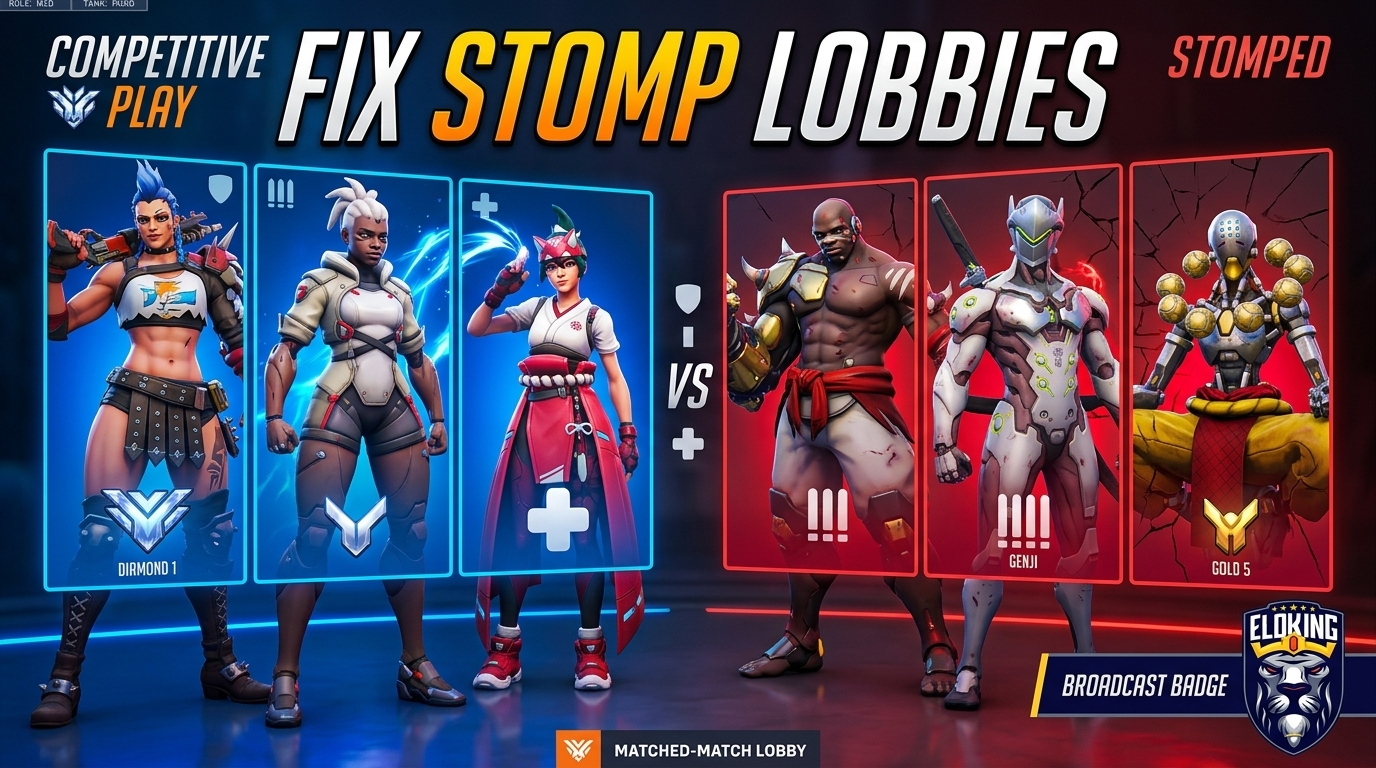
You queue up for a ranked match expecting a tight fight, and instead the scoreboard turns into a landslide before the doors even open. One team has players far outside the lobby's skill range, one hero pick feels impossible to answer, and somehow the match is already over in the first minute. If Overwatch 2 ranked is supposed to feel competitive, why does it so often feel like the system itself is handing out stomp lobbies?
The frustrating part is that this isn't just bad luck, and the fixes are not the ones most players think to try. There are specific reasons matchmaking keeps producing these one-sided games, and some of them are buried in how ranked actually works. Once you see what's causing the chaos, the solution gets a lot clearer - but it's probably not where you expect.
Why does ranked matchmaking feel broken in Overwatch 2?
The first thing players notice is the shape of the loss. A normal defeat feels playable, but a stomp lobby feels decided before your team even stabilizes. You aren't just down a round; you're watching a snowball effect where every reset comes too late. This experience fuels the growing "ranked trust problems" within the community, as players struggle to believe the ladder is actually testing their skill.
Blizzard Entertainment matchmaking-related updates in early 2026, including the "Transparency in Tiers" blog post, attempted to address these concerns by revealing more about lobby MMR spreads. However, when players can't tell if they were outplayed or simply dropped into a volatile match, they stop trusting the system. This lack of clarity turns every blowout into evidence that the ladder is broken. The core issue isn't just the loss - it's the feeling that the outcome was pre-written, a sentiment that persists even when the underlying math is technically sound.
Struggling to win? Bad teammates?
Purchase a game with one of our PRO players.
One game
Average wait time <30 minutes
$4.00
$3.32 per game
Two games
Average wait time <30 minutes
$8.00
$3.00 per game
Three games
Average wait time <30 minutes
$12.00
$2.50 per game
What parts of Overwatch 2 ranked make stomp lobbies more likely?
Queue structure is where the rot starts. Ranked has to juggle role preferences, party sizes, uneven player pools, and fast queue expectations at the same time. Every extra constraint narrows the pool of possible matches. The smaller the pool gets, the harder it is to build two teams that actually look even on paper.
Ranked in Overwatch 2 is also trying to stay flexible across solo players, duos, full stacks, and role-based matchmaking, and that flexibility can turn into fragmentation. Split queues make it easier for one lobby to get weird fast.
The practical implication is obvious. If Blizzard wants fewer stomp lobbies, it probably has to tighten the queue rules that create the most imbalance in the first place. Less wiggle room. Fewer exceptions. More honest matchmaking, even if it is a little slower.
What can players do right now when matchmaking feels unplayable?
While developer updates aim for long-term stability, players can take immediate steps to mitigate the chaos of the current matchmaking pool. This is especially vital for those in the middle of the bell curve - such as a Silver getting stomped by high-variance lobbies - where the player density is high but skill consistency is low.
Team up with a stable duo or trio; consistent communication makes chaotic lobbies easier to read and less likely to snowball.
Stick to your best role before your next search, and avoid using ranked as a testing ground for new heroes when the competitive environment already feels volatile.
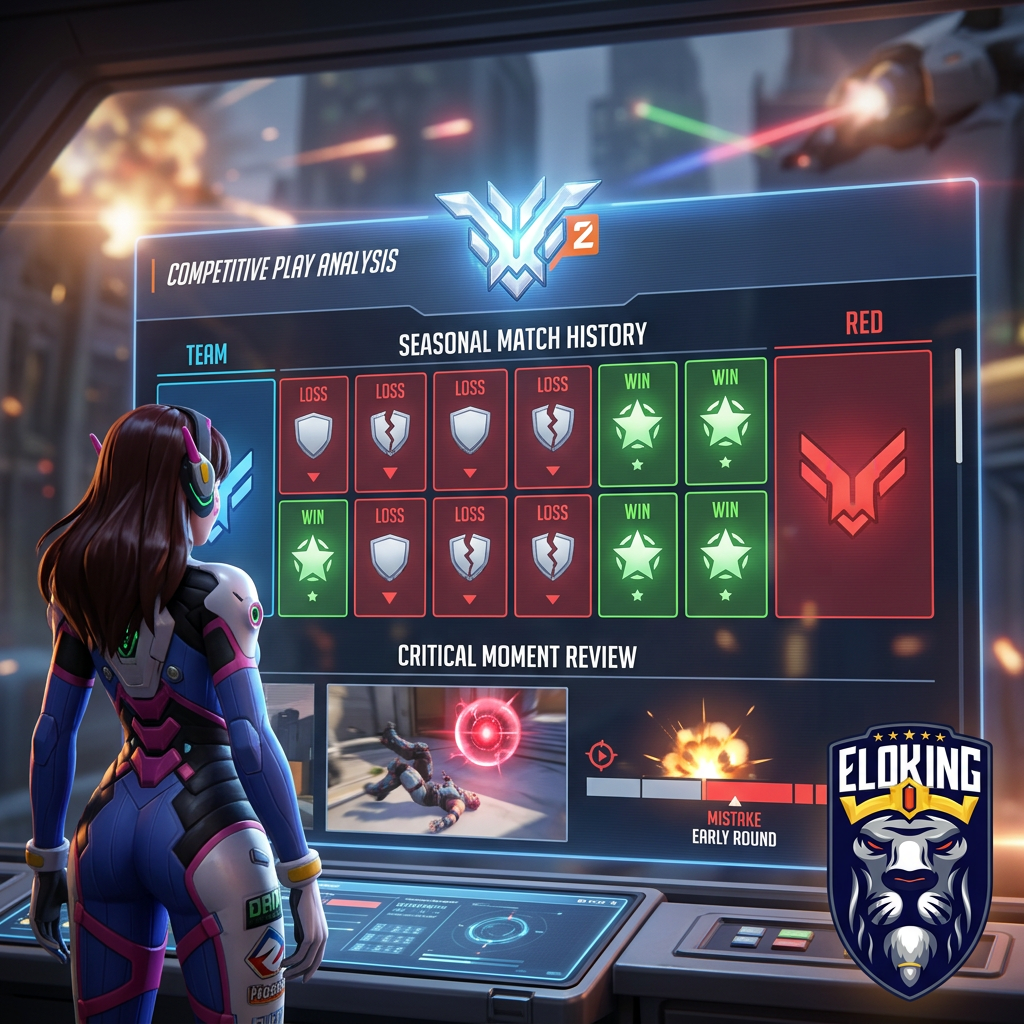
Review your last three losses before jumping back in, as a tilt streak is often the point where one bad game turns into a full session collapse.
Manage your avoid slots for repeat griefers rather than every player who had one bad map, ensuring the system targets persistent issues instead of reacting to temporary friction.
Take a break after two rough games in a row; entering the search for a match while frustrated is the fastest way to tank your rating.
Should Blizzard tighten ranked group rules to reduce stomp lobbies?
Yes, and it is the most believable lever left. Tightening group rules attacks the problem at the point where queue imbalance starts. If ranked keeps trying to mix too many party shapes, too many role pressures, and too many exceptions in the same competitive pool, the system keeps paying for that flexibility with ugly matches. Blizzard Entertainment's matchmaking-related updates show that the topic is still active, but the real fix is structural. Blizzard does not need to reinvent Overwatch 2 ranked to make it better. It needs to narrow the conditions that let bad lobbies form so easily.
The trade-off is queue time. That part is real. If the rules get stricter, some players will wait longer. But a fast queue that spits out garbage is not a flex. It is just speed. Competitive Play lives or dies on whether players believe the match is actually testing them. That is what the whole game comes down to. A ranked ladder with more honest lobby construction is worth more than a shorter wait that dumps you into another stomp.
So yes, if Blizzard wants trust back, tighter group rules are the cleanest place to start.
How should players interpret bad streaks without misdiagnosing the problem?
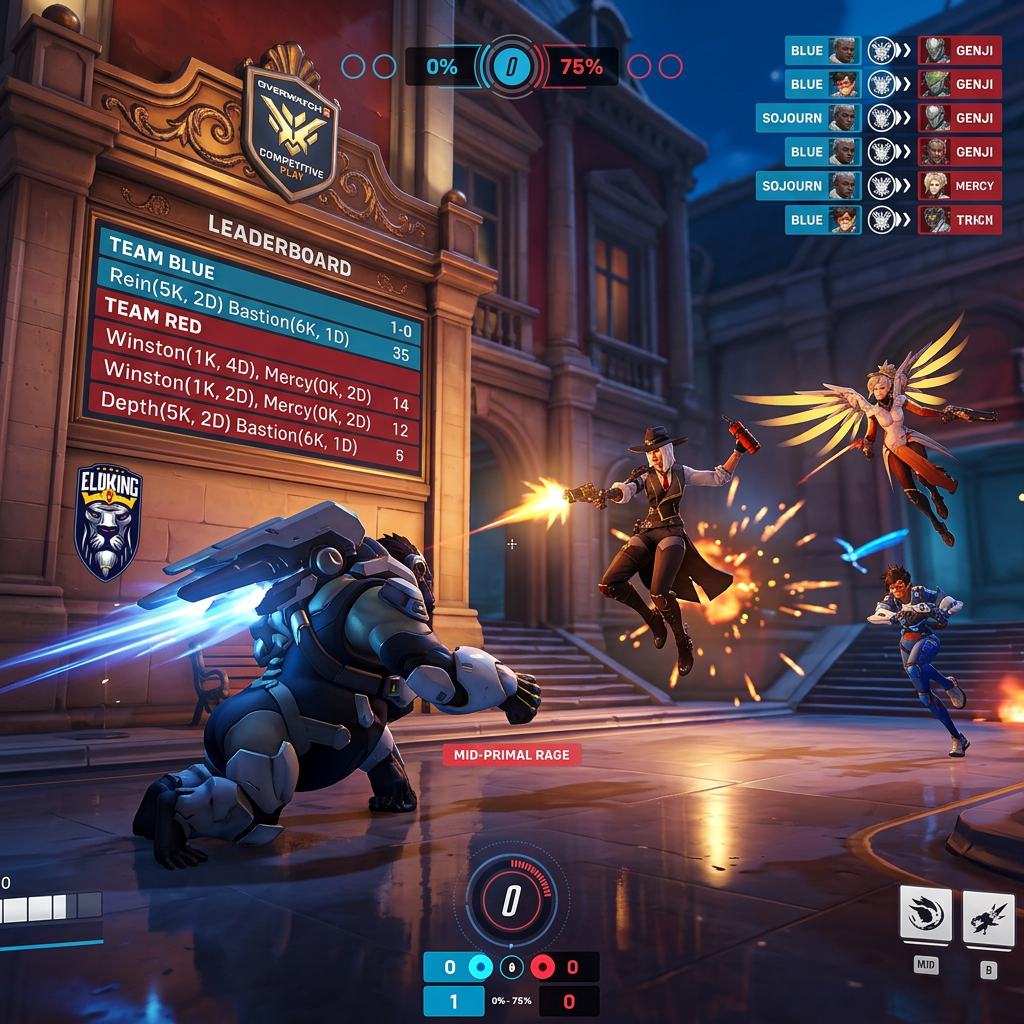
Some streaks are simply the result of high variance. In a 5v5 environment, the impact of a single player is magnified; an early death or a mis-timed ultimate can trigger a massive snowball effect. This often creates the illusion of a "stomp" even when the MMR of both teams is perfectly matched. Because there is one less tank to mitigate mistakes, a small tactical error can make a fair lobby look like a total system failure.
However, before blaming the developers, players should consider whether their own performance is contributing to the slide. The smart move is not to assume every blowout proves the ladder is rigged. Instead, use a simple test: if the same pattern of one-sided games persists across different times, roles, and compositions, it may be a structural matchmaking issue. However, if the bad games mostly appear after long sessions or while you're tilted, the problem is likely internal. Understanding the difference between mechanical snowballing and actual ranking errors is key to maintaining your sanity on the climb.
Yes. As soon as a lobby mixes solo players with coordinated groups, matchmaking has fewer clean ways to balance communication, role coverage, and raw coordination at the same time. That is how a match can look even on paper and still collapse the moment one side starts moving together.
Stop swapping around inside ranked and lock in your strongest role for the rest of the session. Role-hopping after a few rough games only adds noise, and it makes it impossible to tell whether the loss streak came from matchmaking or from trying to force bad fits.
No. In 5v5, one early death, one wasted ultimate, or one lost duel can turn a fair lobby into a demolition reel in under a minute. The match feels rigged because the snowball is so fast, not because every stomp starts with bad team balance.
Not if the session is already tilted. Grinding through bad queues while frustrated usually turns a couple of ugly losses into a full rating collapse, because the next queue starts from anger instead of focus. A hard stop after two rough games is cleaner than chasing your MMR back in a fog.
Yes, and that is the price of cleaner matchmaking. When the system has fewer party shapes and fewer exceptions to juggle, it can build fairer lobbies, but the queue has less freedom to fire instantly.
What’s next?
Ready to level up your gameplay and climb the ranks in Overwatch 2? Purchase our top-notch Eloking Overwatch 2 Boost now and dominate the competition like never before!
Purchase Overwatch 2 Boost
and start playing at the rank you deserve!
















 Quality
